Image: An Armenian woman is seen kneeling beside her dead child in a field within sight of help and the safety of Aleppo, Syria, during the Armenian Genocide, 1915.
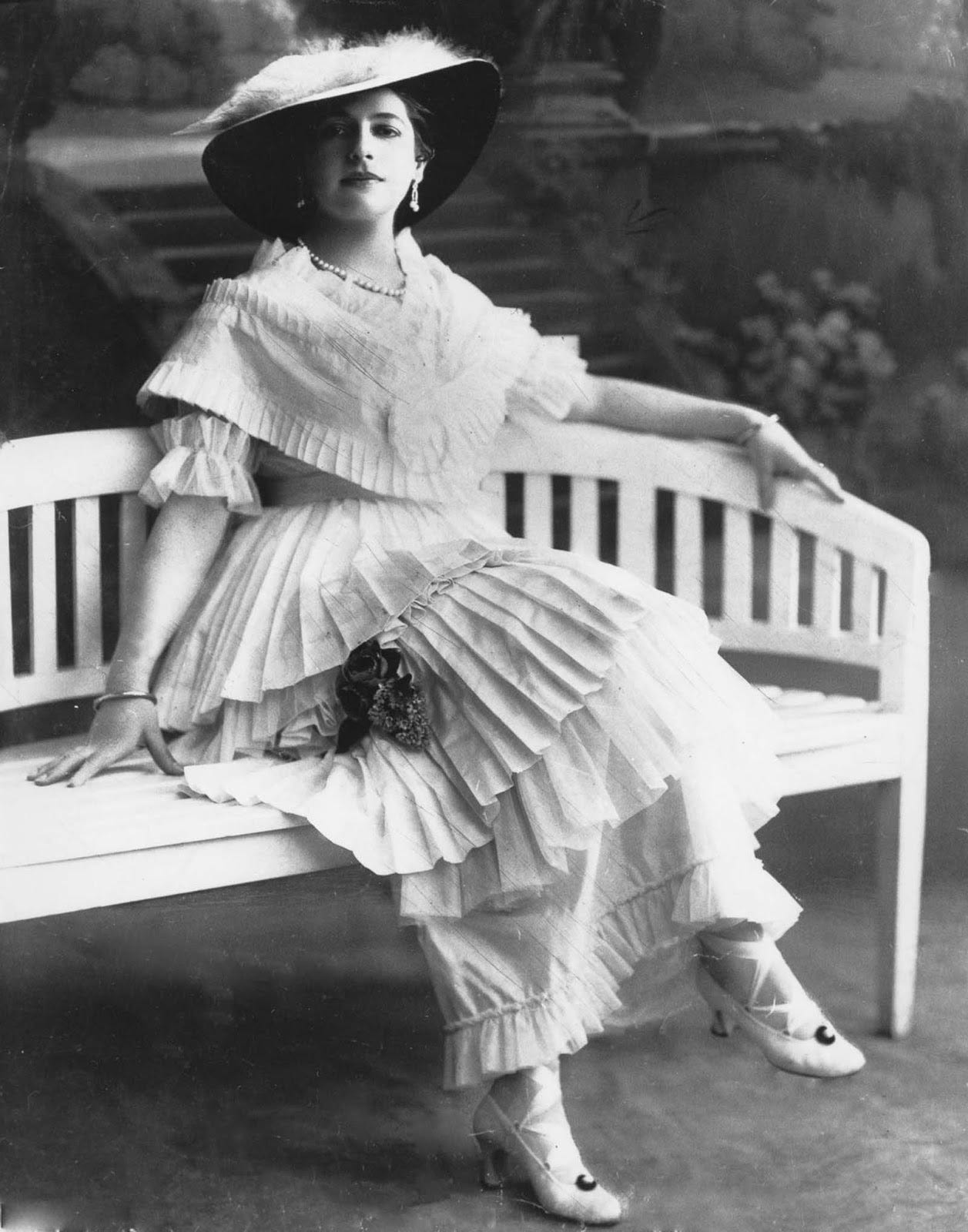
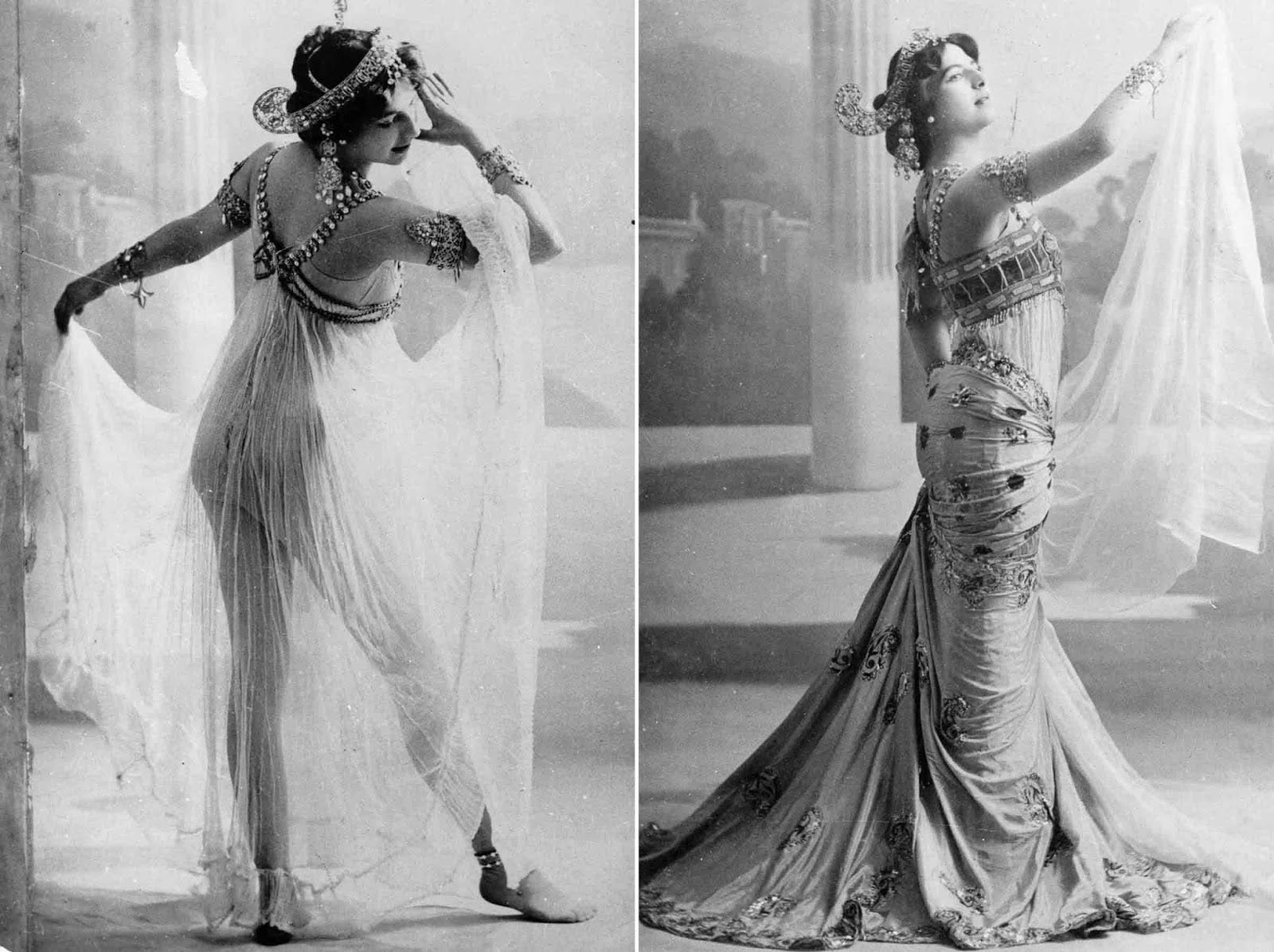
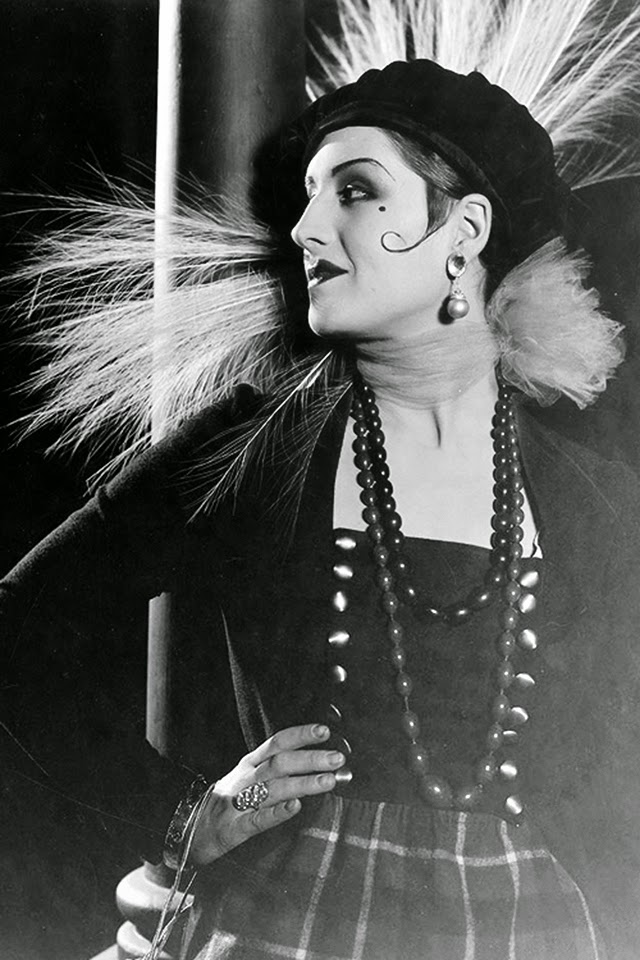
Both images: Mata Hari – The Glamorous First World War Double Agent
An icon of female espionage, Margaretha Zelle, also known as Mata Hari, was initially renowned for her talents as a dancer and courtesan and was a popular figure in Parisian cabarets during the Belle Époque. When the First World War broke out in 1914, Mata Hari was recruited as a spy by the Germans due to her connections within the Parisian elite. One year later, France offered her a job spying on the Germans. She agreed to use her charms to extract information from her clients—this time the Germans. Suspected of counterespionage by the French authorities, Hari was convicted and executed by firing squad at the Château de Vincennes in 1917.
On March 15, 44 BCE, upon arriving at the Roman Senate for a meeting, Julius Caesar was attacked by a group of senators and stabbed twenty-three times. One of these blows was inflicted by his former protégé, Marcus Junius Brutus. A few years earlier, Brutus had opposed Caesar by siding with his rival, Pompey, during one of the Roman Republic’s civil wars. Caesar prevailed in the end but chose to pardon Brutus, offering him a position in the Senate.
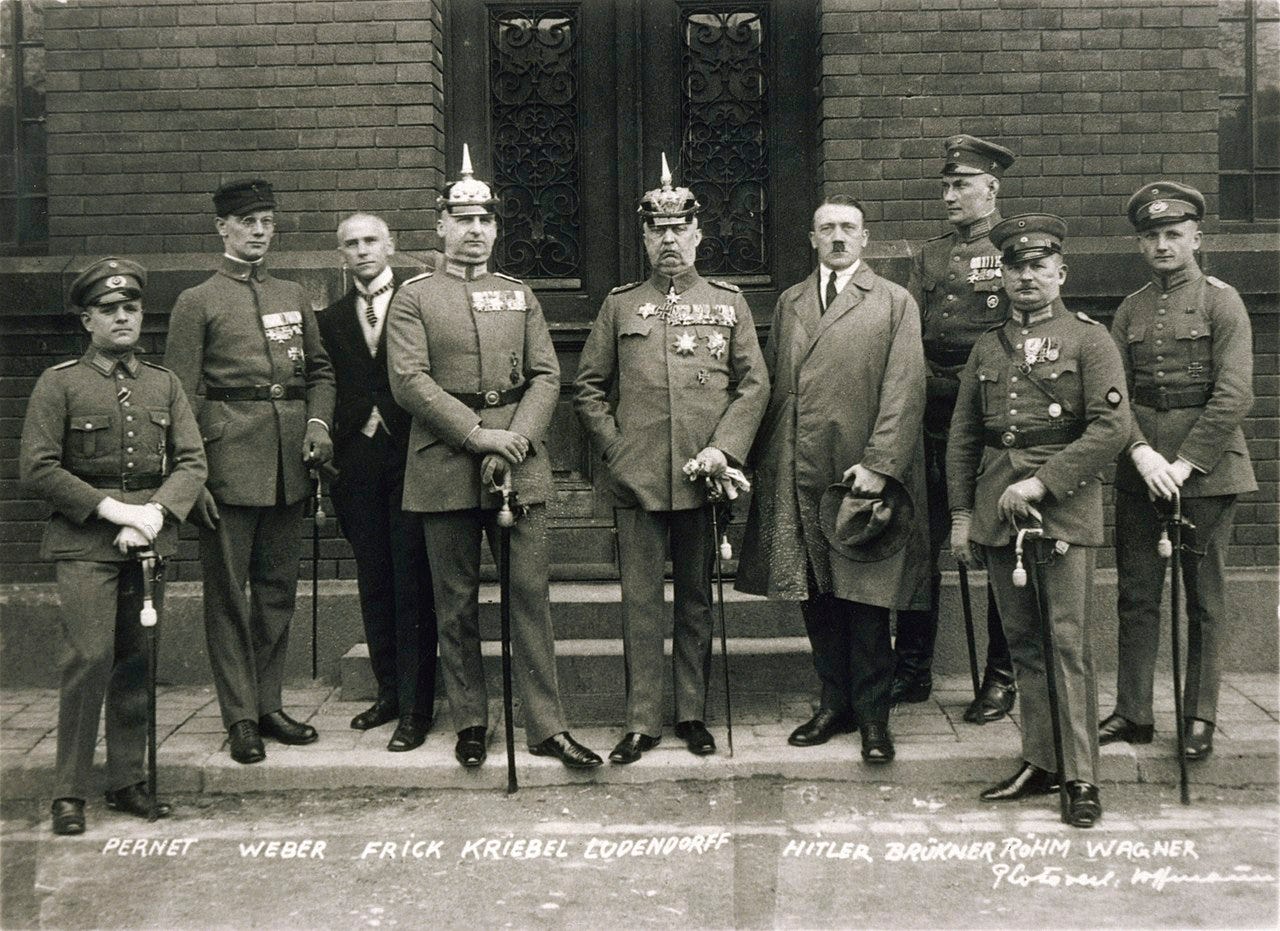
Image: A group of defendants in the Munich Beer Hall Putsch trial, 1924. Adolf Hitler is 4th from the right.
The Munich Beer Hall Putsch was a failed coup attempt by Adolf Hitler and his followers in November 1923. The event took place in Munich, Bavaria, and aimed to overthrow the Weimar Republic and establish a nationalist government.
On the evening of November 8, 1923, Hitler and around 2,000 Nazi supporters, including the SA (Sturmabteilung) and other paramilitary groups, gathered at the Bürgerbräukeller beer hall. Hitler announced the coup and declared his intention to march on Berlin to seize power1. The next morning, the Nazis marched through the streets of Munich, but they were met by a police cordon at the Feldherrnhalle, a central square in the city. A confrontation ensued, resulting in the deaths of 15 Nazis, four police officers, and one bystander.
Hitler was arrested two days later and charged with treason. He was tried and sentenced to five years in Landsberg Prison, where he wrote “Mein Kampf” with the help of fellow prisoner
s. Although the Putsch failed, it brought Hitler national attention and allowed him to use his trial as a platform to spread his ideas. After serving only nine months, Hitler was released and focused on gaining power through legal means, eventually leading to his rise to power in Germany.
The Munich Beer Hall Putsch remains a significant event in the history of the Nazi Party and Adolf Hitler’s rise to power, highlighting the early attempts at revolution and the eventual shift to political strategy.
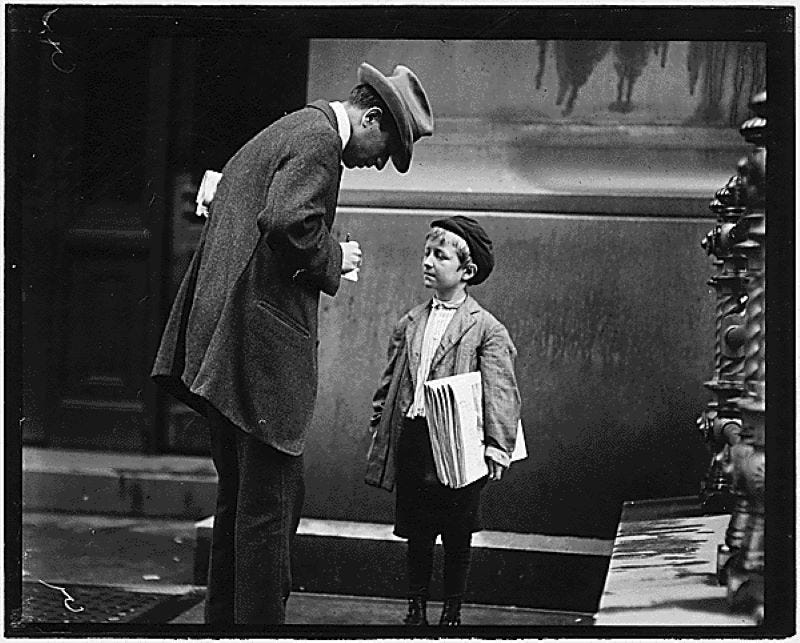
Michael Mc Nelis, 8 years old, a newsboy. This boy has just recovered from his second attack of pneumonia. He was found selling newspapers in a big rainstorm today. Philadelphia, Pa., June 12, 1910.
Subscribe to our Page and receive notifications of new posts automatically so you do not miss a thing – it is free!!!
Please consider supporting our ongoing efforts to bring you, our valued readers, engaging and thoughtful historical content. Your monthly financial support goes a long way in helping us continue our work. Alternately, if you would like, you may make a one-time donation at https://www.buymeacoffee.com/YesterdayToday
If you buy something through our site, we might earn a commission, but this will not affect the price you pay for the item.
Thank you for your support.
Michael
Yesterday Today
Subscribe to get access
Read more of this content when you subscribe today.
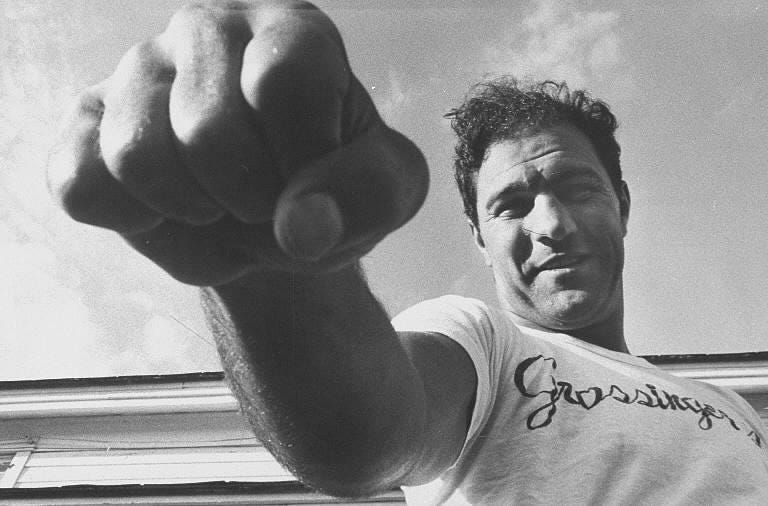
A close-up of the fist of boxing heavyweight contender Rocky Marciano as he smiles smugly while standing outside at his training camp at Grossinger’s. 1955.
Yesterday Today’s Substack is a reader-supported publication. To receive new posts and support my work, consider becoming a free or paid subscriber.Subscribed
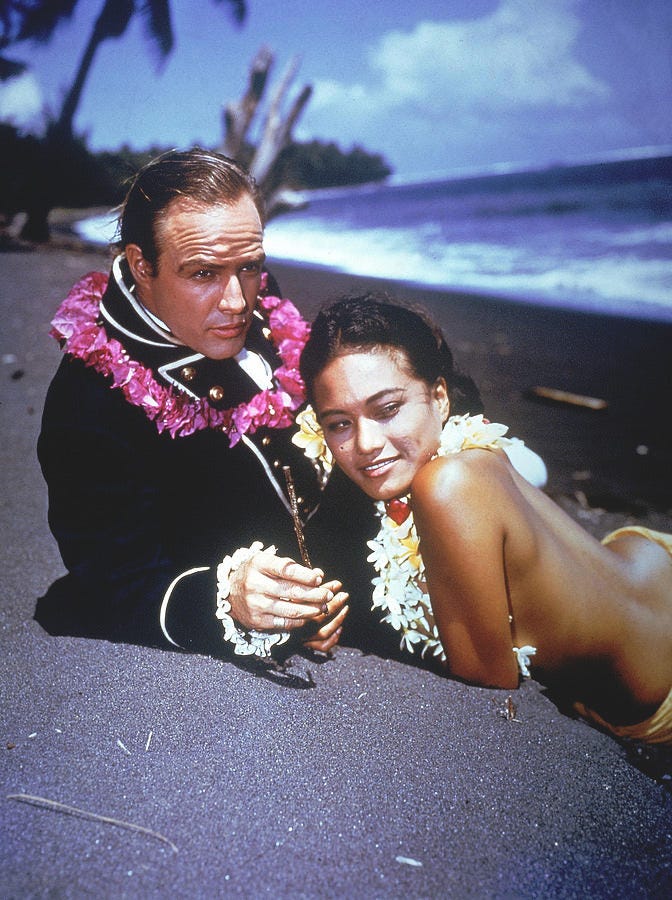
Actor Marlon Brando with Mutiny on the Bounty native Tahitian actress Tarita Teriipaia lying together on the beach during a break in filming in Tahiti. 1961.
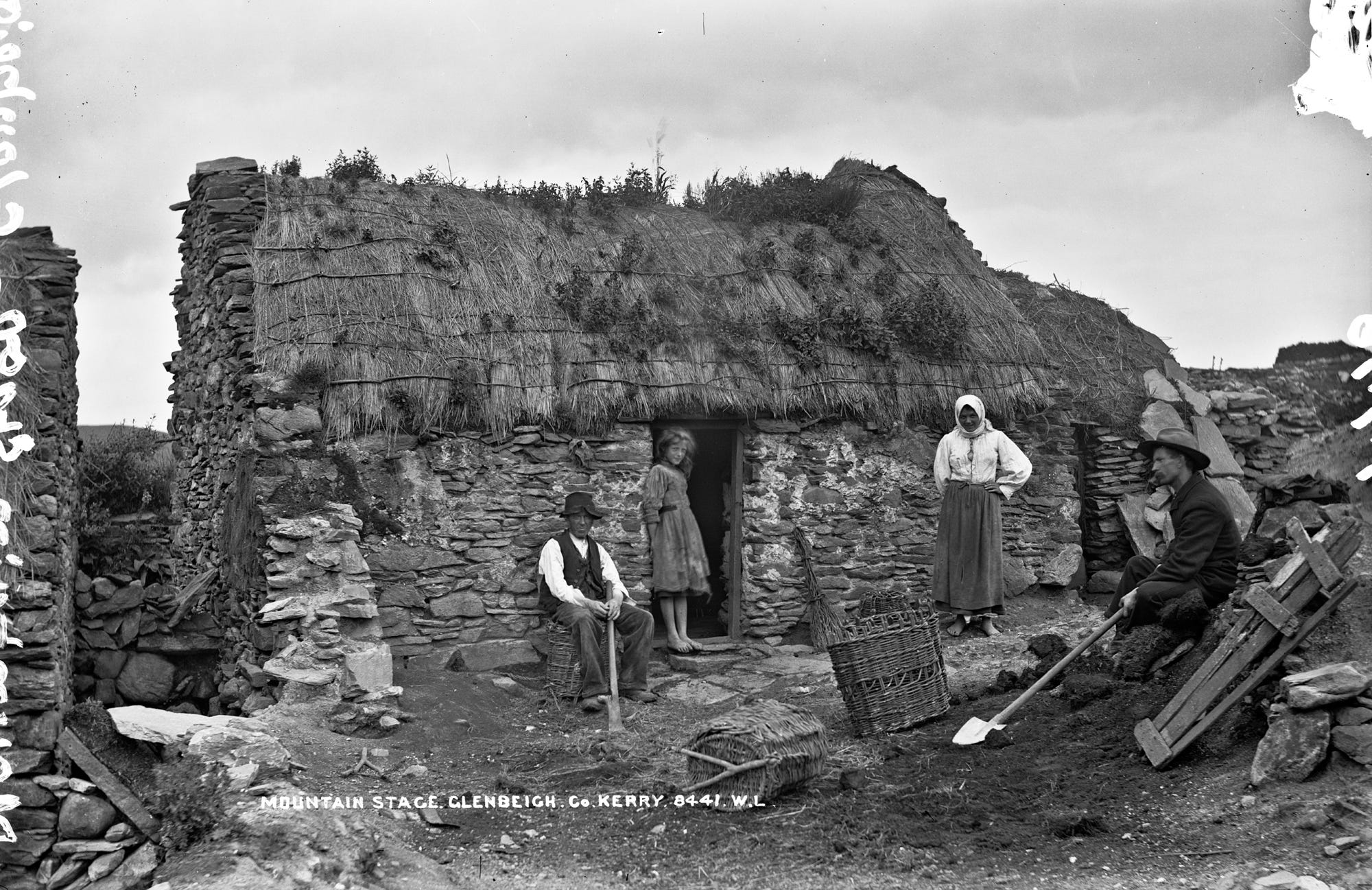
This amazing image of poverty, destitution and sheer misery certainly makes one cringe. Cringe for the people who had to live in such terrible conditions. Some of the worst were in Donegal but this is in the Kingdom of Kerry and shows that tough times affected people all over Ireland. This photograph was taken in 1887.
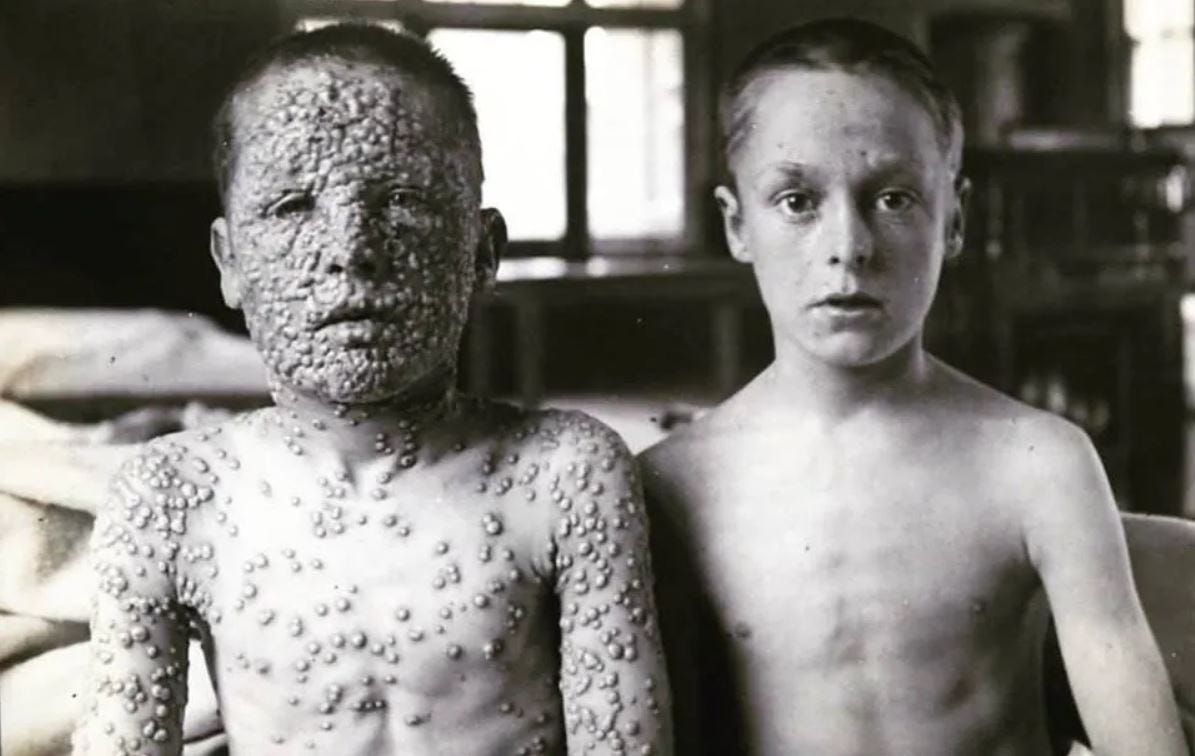
This photograph, taken in 1901 by Dr. Allan Warner of the Isolation Hospital in Leicester, UK, shows two boys, both aged 13 years. The one on the right was vaccinated in infancy, the other was not vaccinated. They were both infected with smallpox from the same source on the same day. Notice that while the one on the left is in the fully pustular stage, the one on the right has had only two spots, which have aborted and have already scabbed. 1/2 For all you Anti-Vaxxers out there.
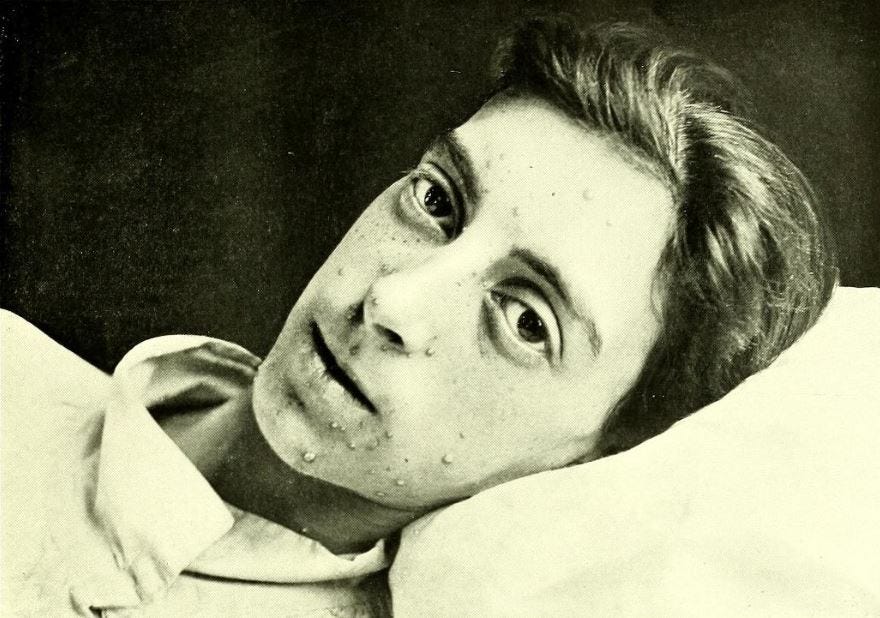
These two images, also taken in 1901 by Dr. Allan Warner, show two sisters, one 13 years old and the other 14 years old, showing the difference between being vaccinated at birth and not being vaccinated as a child. With the rise of anti-vaccination sentiment and tendencies today, we would do well to heed the lessons of these two sets of photographs. 2/2
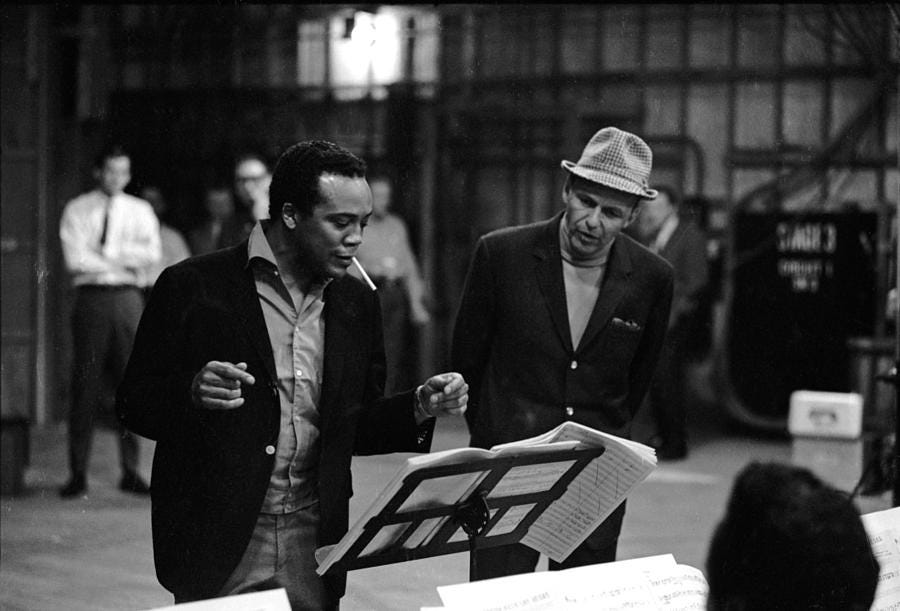
American jazz musician, arranger, and composer Quincy Jones (1933-2024)(left) works with singer and actor Frank Sinatra (1915-1998) on a soundstage, 1964.
Subscribe to our Page and receive notifications of new posts automatically so you do not miss a thing – it is free!!!
Please consider supporting our ongoing efforts to bring you, our valued readers, engaging and thoughtful historical content. Your monthly financial support (see link at bottom) goes a long way in helping us continue our work. Alternately, if you would like, you may make a one-time donation at https://www.buymeacoffee.com/YesterdayToday
If you buy something through our site, we might earn a commission, but this will not affect the price you pay for the item.
Thank you for your support.
Michael
Yesterday Today
Subscribe to get access
Read more of this content when you subscribe today.
***Become a Subscriber for just $5 per month – the price of a coffee, and never miss an article. Your support allows us to continue purchasing subscriptions to different museums and photographic companies so we can continue to bring you unique and exceptional history. Your support is critical; we hope you’ll become a partner. Or, if you like, you may make a one-time donation at https://www.buymeacoffee.com/YesterdayToday ***
Subscribe to get access
Read more of this content when you subscribe today.
Bessie Love, born Juanita Horton on September 10, 1898, in Midland, Texas, was a prominent actress during the 1920s. Her career began in the silent film era, and she quickly became known for her roles as innocent young girls and wholesome leading ladies. Love’s petite frame and delicate features made her a perfect fit for the flapper image that was popular during the Roaring Twenties. Her performances captivated audiences and solidified her status as one of the era’s most beloved actresses.
Love’s journey to stardom began when she moved to Hollywood with her family. She was discovered by pioneering film director D.W. Griffith, who placed her under personal contract. Griffith’s associate, Frank Woods, gave her the stage name Bessie Love, believing it would be easy for audiences to remember and pronounce. Love’s early roles in films such as “The Flying Torpedo” (1916) and “The Good Bad-Man” (1916) showcased her talent and versatility, paving the way for her successful career in the 1920s1.
During the 1920s, Love starred in numerous films that highlighted her acting prowess. One of her most notable performances was in “The Broadway Melody” (1929), a musical film that earned her a nomination for the Academy Award for Best Actress. This film was significant not only for Love’s career but also for the film industry, as it was one of the first sound films to win the Academy Award for Best Picture. Love’s ability to transition from silent films to talkies demonstrated her adaptability and ensured her continued success in the evolving industry.
In addition to her work in “The Broadway Melody,” Love appeared in other successful films throughout the decade. Her roles in “The Matinee Idol” (1928) and “The Lost World” (1925) further cemented her reputation as a talented and versatile actress. Love’s performances were often praised for their authenticity and emotional depth, making her a favorite among both audiences and critics. Her ability to convey complex emotions with subtlety and grace set her apart from many of her contemporaries.
Despite her success, Love faced challenges in her personal life. She married film producer William Hawks in 1929, but the marriage ended in divorce in 1936. The pressures of maintaining a successful career in Hollywood, coupled with the demands of her personal life, took a toll on Love. However, she remained resilient and continued to work in the film industry, even as the popularity of silent films waned and talkies became the norm.
As the 1920s came to a close, Love’s career began to decline. The advent of sound films brought new challenges, and many silent film stars struggled to adapt. However, Love’s talent and determination allowed her to continue working in the industry, albeit in smaller roles. She eventually moved to England, where she continued to act in films, theatre, and television until her retirement.
Bessie Love’s contributions to the film industry during the 1920s were significant. Her performances in both silent and sound films showcased her versatility and talent, making her one of the era’s most beloved actresses. Despite the challenges she faced, Love’s resilience and dedication to her craft ensured her lasting legacy in Hollywood history. Her work continues to be celebrated by film enthusiasts and historians, who recognize her as a pioneering figure in the early days of cinema.
Subscribe to continue reading
Subscribe to get access to the rest of this post and other subscriber-only content.
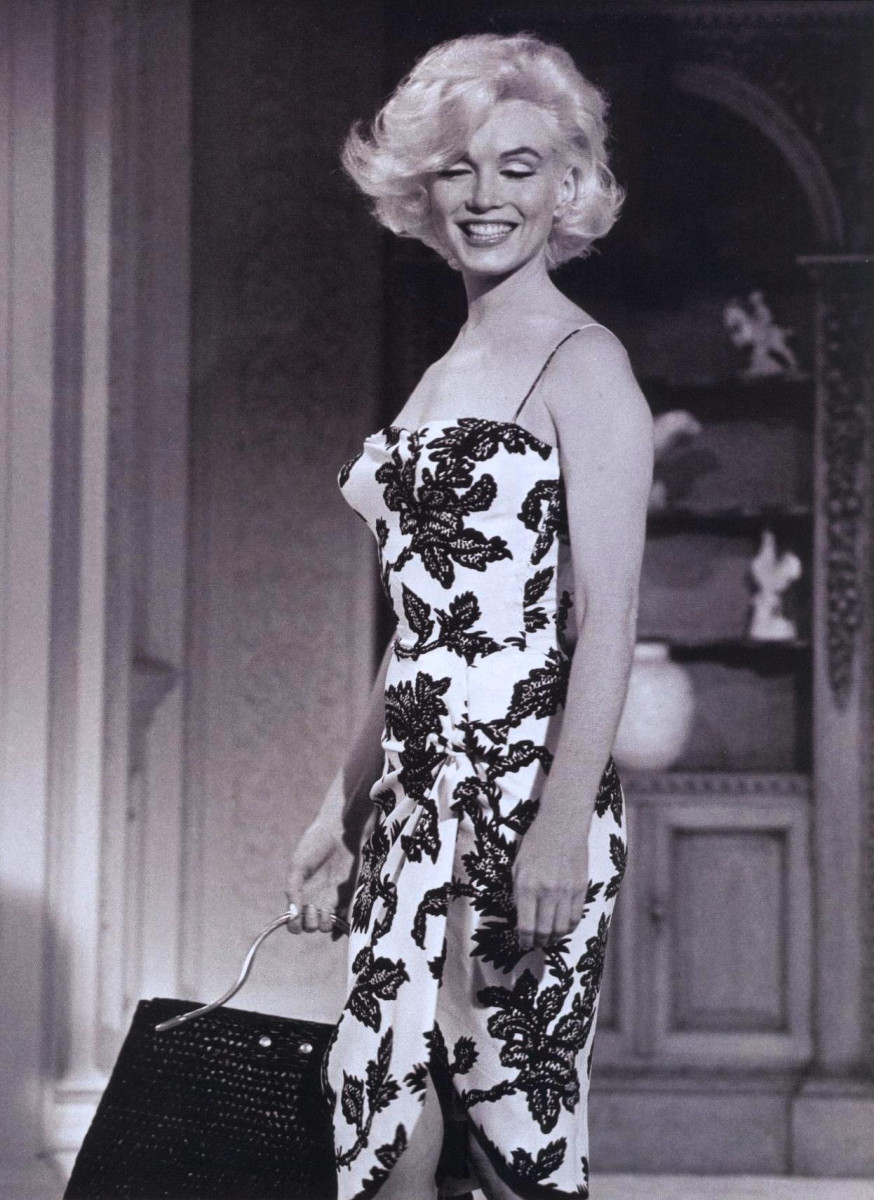
Marilyn Monroe’s unfinished film “Something’s Got to Give” remains an enigmatic piece of Hollywood history. The 1962 romantic comedy was intended to be Monroe’s comeback after a brief hiatus from the film industry, following her successful performance in “The Misfits” (1961). Directed by George Cukor, the film also starred Dean Martin and Cyd Charisse. However, the production faced numerous challenges and ultimately, Monroe’s untimely death left the project incomplete, adding a layer of tragic intrigue to its legacy.
The story revolves around the character Ellen Wagstaff Arden, played by Monroe, who is presumed dead after being lost at sea for five years. Upon her return, she discovers that her husband Nick (Dean Martin) has remarried, creating a comedic yet emotionally charged premise. The screenplay, written by Arnold Schulman and Nunnally Johnson, was adapted from the 1940 film “My Favorite Wife” starring Irene Dunne and Cary Grant. Despite the film’s lighthearted nature, the behind-the-scenes turmoil marred its development.
Monroe’s personal struggles, including chronic illnesses and dependency on prescription drugs, significantly impacted her ability to attend filming consistently. Reports of her erratic behavior and frequent absences from the set led to production delays and escalating tensions among the cast and crew. Director George Cukor, known for his meticulous approach, found it increasingly difficult to manage the situation. In June 1962, Monroe was fired from the project, though she was later rehired following negotiations.
Despite Monroe’s firing and subsequent rehiring, the film’s troubles persisted. The production shutdown, combined with Monroe’s unexpected death in August 1962, meant that “Something’s Got to Give” would never be completed. Only 37 minutes of the original footage exist, offering a glimpse into what could have been a successful film. These scenes, however, showcase Monroe’s undeniable charm and talent, highlighting the potential of the unfinished project.
In 1990, a reconstruction of the film was attempted using the existing footage, combined with additional materials, to create a more coherent narrative. This effort allowed audiences to appreciate Monroe’s performance and understand the film’s intended storyline. Despite its incomplete state, “Something’s Got to Give” serves as a poignant reminder of Monroe’s enduring legacy and the challenges she faced during her career.
Ultimately, “Something’s Got to Give” stands as a testament to the complexities of Hollywood and the pressures faced by its stars. Monroe’s involvement in the film, coupled with her untimely death, has cemented its place in cinematic history as a symbol of unfulfilled potential. The fragments of the movie that remain continue to captivate audiences, providing a haunting glimpse into the final moments of one of Hollywood’s most iconic figures.
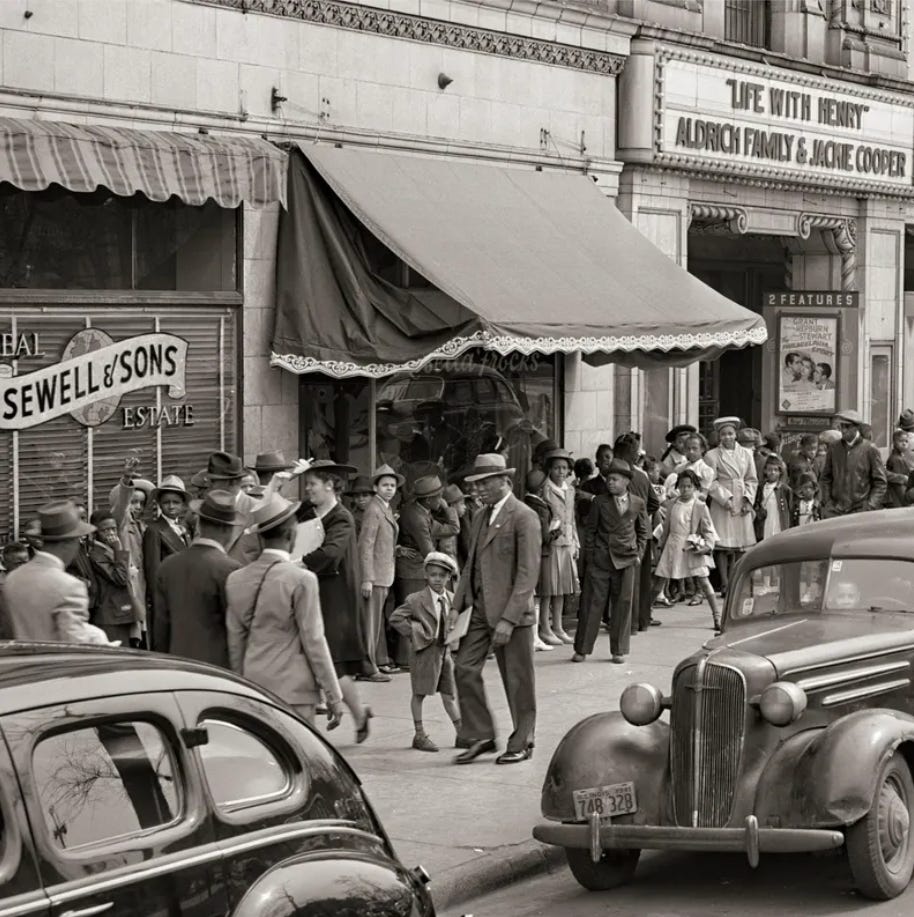
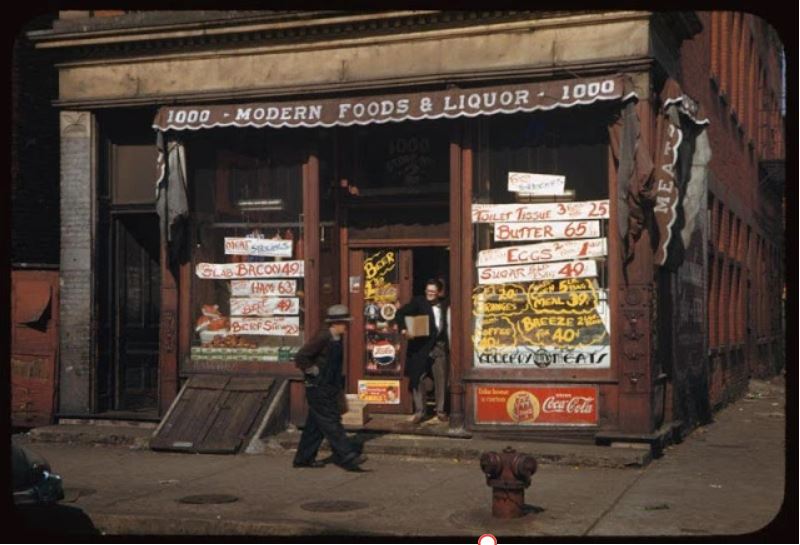
Chicago in the early 1940s was a city undergoing significant transformation. As the United States entered World War II in December 1941, Chicago emerged as a pivotal industrial and transportation hub, contributing massively to the war effort. The city’s factories were repurposed for wartime production, manufacturing everything from tanks to aircraft components. This industrial boom not only provided jobs for thousands of Chicagoans but also attracted workers from other parts of the country, leading to a demographic shift and a burgeoning population. The war years saw Chicago bustling with activity, embodying the spirit of resilience and determination characteristic of the era.
Despite the war’s impact, daily life in Chicago retained its vibrancy. The city’s cultural scene flourished, with jazz and blues clubs, theaters, and art galleries offering a rich tapestry of entertainment and artistic expression. Chicago’s music scene, in particular, thrived during the 1940s, with legendary musicians like Muddy Waters and Howlin’ Wolf contributing to the burgeoning blues movement. The city’s theaters and cinemas provided an escape for residents, showing the latest Hollywood films and hosting live performances. These cultural outlets not only provided relief from the rigors of wartime but also reinforced Chicago’s reputation as a center of creativity and innovation.
The early 1940s also marked a period of significant social change in Chicago. The Great Migration, which had begun in the early 20th century, continued to bring African Americans from the rural South to the urban North in search of better economic opportunities and an escape from Jim Crow segregation. Chicago’s South Side became a vibrant African American community, with Bronzeville emerging as a cultural and economic center. This influx of new residents added to the city’s diversity but also highlighted existing racial tensions and the need for social reform. The war effort, coupled with these demographic shifts, set the stage for future civil rights advancements in the city.
Urban development in Chicago during this time was also notable. The city’s skyline was dotted with new construction projects, reflecting the optimism and progress of the era. However, the war brought challenges, including material shortages and rationing, which impacted both public and private development. The city government implemented measures to address housing shortages, as the influx of war workers increased the demand for accommodation. Despite these challenges, Chicago’s infrastructure continued to evolve, laying the groundwork for post-war growth and expansion.
The photographs in this collection vividly illustrate these dynamic changes. Images of bustling factories, crowded streets, and cultural landmarks provide a visual narrative of Chicago’s resilience and vitality during the early 1940s. Images of jazz clubs and theaters capture the city’s thriving cultural scene, while photographs of new construction projects highlight the era’s optimism and progress. Photos of the diverse communities, particularly the African American neighborhoods of the South Side, also underscore the social changes and challenges of the time.
In conclusion, Chicago in the early 1940s was a city of transformation and resilience. The war effort propelled industrial growth, while the cultural scene offered a rich tapestry of artistic expression. Social changes, driven by the Great Migration, set the stage for future civil rights advancements. Urban development continued despite wartime challenges, reflecting the city’s enduring spirit of progress. Through the lens of your photographs, the multifaceted story of Chicago during this pivotal era can be brought to life, providing a comprehensive glimpse into its historical and cultural landscape.
The early 1940s were a transformative period for Chicago, marked by several significant events:
World War II Impact: Chicago played a crucial role in the war effort, with its factories producing military equipment and supplies. This industrial boom provided jobs and attracted workers from other parts of the country, leading to a demographic shift1.
Great Migration: The influx of African Americans from the rural South continued, with many settling in Chicago’s South Side. This migration led to the growth of vibrant African American communities, such as Bronzeville, and highlighted racial tensions and the need for social reform1.
Cultural Flourishing: Despite the war, Chicago’s cultural scene thrived. Jazz and blues clubs, theaters, and art galleries offered a rich tapestry of entertainment and artistic expression1. Musicians like Muddy Waters and Howlin’ Wolf contributed to the burgeoning blues movement.
Urban Development: The city’s skyline saw new construction projects, reflecting the optimism and progress of the era. However, material shortages and rationing due to the war posed challenges to both public and private development1.
Social Changes: The war effort and demographic shifts set the stage for future civil rights advancements. The Great Migration and the growing African American population in Chicago contributed to the city’s diversity and cultural richness1.
These events collectively shaped Chicago’s identity during the early 1940s, making it a city of resilience, creativity, and progress.
In the summers of 1940 and 1941, photographer John Vachon passed through Chicago, where he put his abilities as a street portraitist across a broad range of people, capturing the elegance and poverty of the central city during wartime.
Subscribe to continue reading
Subscribe to get access to the rest of this post and other subscriber-only content.
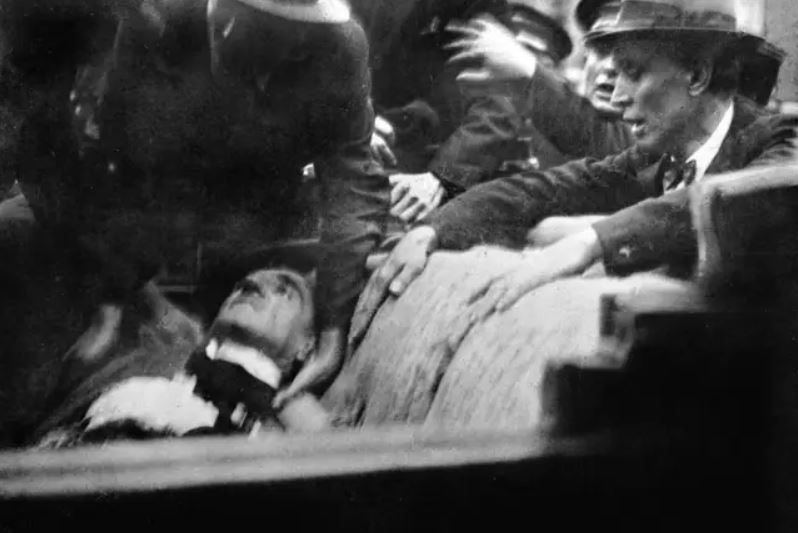
“King Alexander and Louis Barthou, Shot Down in Streets of Marseilles by Revolutionists. Furious Spectators Batter Bulgarian Killer to Death As His Victims Die. Alexander Murdered” – “Universal Newsreel brings you the First Actual motion pictures of the murder of King Alexander of Jugoslavia and French Foreign Minister Barthou.” The footage shows scenes of the King arriving on a cruiser at Marseilles, riding through the town, then shots ring out, and after the King’s death is confirmed the assembled crowd beats the Bulgarian assassin to death. the police are unable to contain the violence.
Earlier that same year French Foreign Minister Louis Barthou had been trying to create an alliance that would contain Hitler’s Germany. This alliance contained many of France’s allies in Eastern Europe like Yugoslavia, together with Italy and the Soviet Union. The long-standing rivalry between Benito Mussolini and King Alexander had made Barthou’s work much more difficult as Alexander was wary about Italian claims against his country together with Italian support for Hungarian revisionism and the Croat Ustaše.
In mid-1934 Barthou assured Alexander that France would strong-arm Mussolini into signing a treaty under which he would renounce his claims against Yugoslavia. Alexander believed that Barthou’s plan was a non-starter, noting that there were hundreds of Ustaše being sheltered in Italy and there was strong evidence that Mussolini had financed an unsuccessful attempt by the Ustaše to assassinate Alwxander in December 1933.
Mussolini believed that it was only Alexander’s charisma & charm that was keeping Yugoslavia falling to pieces and he was sure that if Alexander were assassinated, then the country wou disintegrate into civil war, thus allowing Italy to annex certain regions of Yugoslavia without fear of reprisals. Barthou invited Alexander for a state visit to France to sign a Franco-Yugoslav agreement. Because there had been deaths of three family members on Tuesdays, Alexander refused to undertake any public functions on that day of the week. On Tuesday, October 9, 1934, however, he had little choice but to begin his visit in Marseille in order to make a bold stance with France in their “Little Entente” alliance.
As Alexander’s motorcade slowly moved through the streets, a Bulgarian assassin, Vlado Chernozemski, moved forward and shot the King twice and the chauffeur with a Mauser C96 semiautomatic pistol. Alexander died in the car and was slumped backwards in the seat with his eyes open. Barthou was also killed by a stray bullet fired by French police during the scuffle following the attack. Lt-Col Piollet struck the assailant with his sword. Ten people in the procession were wounded, including General Alphonse Georges who was hit by two bullets as he tried to intervene. Nine people in the crowd that came to see the king were wounded, four of them fatally. Among them was Yolande Farris, barely 20 years old, on Place Castellane, who came to the Palais de la Bourse to see the king. She was hit by a stray bullet and died at the Hôtel-Dieu on October 11, 1934. Mrs. Dumazet and Durbec, who also came to see the king, also died. This event was notable as it was one of the first assassinations to be captured on film; the shooting took place in front of the newsreel cameraman, who was only metres away at the time. While the exact moment of shooting was not captured on film, the events leading to the assassination and the immediate aftermath were. The body of the chauffeur Foissac, who had been mortally wounded, slumped and jammed against the brakes of the car, which allowed the cameraman to continue filming from within inches of the King for a number of minutes afterwards. The film record of Alexander I’s assassination remains one of the most notable pieces of newsreel in existence.
Subscribe to Yesterday Today’s website to receive updates on the most current posts. The best part is that it’s FREE!!!:
Please Consider Supporting Our Ongoing Efforts to Bring You, Our Valued Viewers, Quality and Interesting Historical Content. Your financial support goes a long way in helping us survive and move forward. You Can Make a One-Time Donation at https://www.buymeacoffee.com/YesterdayToday
If you buy a product through an affiliate link our website, we may earn a commission, but this will not affect the price you pay for the item.
Thank You For Considering to Support Us.
Michael
Yesterday Today
Subscribe to get access
Read more of this content when you subscribe today.
Barbara Eden, born Barbara Jean Morehead on August 23, 1931, in Tucson, Arizona, is an American actress and singer best known for her iconic role as Jeannie in the TV sitcom “I Dream of Jeannie” (1965-1970). Eden’s career began in the mid-1950s with appearances on television shows like “The Johnny Carson Show” and “Burke’s Law”. She quickly gained popularity and landed her first major film role in “A Private’s Affair” (1959).
Eden’s breakthrough came with “I Dream of Jeannie”, where she portrayed the beautiful and mischievous genie who becomes the master of an American astronaut, played by Larry Hagman. The show was a huge success and ran for five seasons, making Eden a household name. Beyond this role, Eden starred in over 20 theatrical and made-for-television films. She worked for at least four movie studios: 20th Century Fox, Metro-Goldwyn-Mayer, Columbia Studios, and Universal Studios. Most notable in her career was the film Flaming Star (1960), in which she acted as Elvis Presley’s leading lady. Other films in which Barbara Eden had a leading role were Voyage to the Bottom of the Sea (1961), The Wonderful World of the Brothers Grimm (1962), Five Weeks in a Balloon (1962), 7 Faces of Dr. Lao (1964) and The Brass Bottle (1964). The Brass Bottle comedy movie led to Sidney Sheldon’s creation of I Dream of Jeannie (1965) comical TV series.
Throughout her career, Eden continued to work in television and film, showcasing her versatility as an actress. Outside of her film and television works, Barbara Eden headlined at major hotel resorts and casinos, including Lake Tahoe, Atlantic City, and Las Vegas. She was also the star attraction at the MGM Grand, Harrah’s, and Caesar’s Palace on concert stages and in legitimate theatres nationwide.
In 1988, Eden received a star on the Hollywood Walk of Fame for her contributions to television. In 1990, the University of West Los Angeles School of Law granted Eden an honorary Doctor of Laws degree. She is still going strong today at the age of 93.
Subscribe to continue reading
Become a paid subscriber to get access to the rest of this post and other exclusive content.
Everyday life in the United States during the 1940s was shaped largely by World War II, which profoundly impacted the home front. The early part of the decade saw families adjusting to wartime realities, with many men enlisting or being drafted into military service. Women stepped into roles traditionally held by men, working in factories and other industries to support the war effort. This period saw the iconic image of “Rosie the Riveter” become a symbol of female empowerment and the nation’s collective effort towards victory. Rationing became a part of daily life, with households conserving food, gasoline, and other resources to ensure enough supplies were available for the military.
Despite the challenges, the 1940s were a time of significant social change. The war accelerated technological advancements and fostered a sense of unity and purpose among Americans. People came together to support the war effort by buying war bonds, participating in scrap drives, and volunteering for civil defence duties. The sense of community and patriotism was palpable, as everyone contributed to the nation’s goals. Additionally, the experiences and opportunities that women and minorities gained during the war laid the groundwork for future social movements and advancements in civil rights.
The late 1940s saw the United States transitioning from wartime to peacetime. The war’s end brought about a period of economic prosperity and growth, often referred to as the post-war boom. Soldiers returned home, and many took advantage of the GI Bill to pursue higher education or buy homes, leading to a surge in suburban development. Consumer goods, which had been scarce during the war, became more available, and Americans enjoyed new conveniences such as refrigerators, washing machines, and television sets. The baby boom began during this period as families reunited and began to grow.
Culturally, the 1940s were a vibrant time for music, movies, and fashion. Swing music and big bands were immensely popular, with figures like Glenn Miller and Duke Ellington dominating the airwaves. Hollywood produced some of its most enduring classics, including films like “Casablanca” and “It’s a Wonderful Life.” Fashion also saw significant changes, with practical wartime styles giving way to more lavish and expressive designs as the decade progressed. Overall, the 1940s were a time of resilience, adaptation, and transformation, impacting American society.
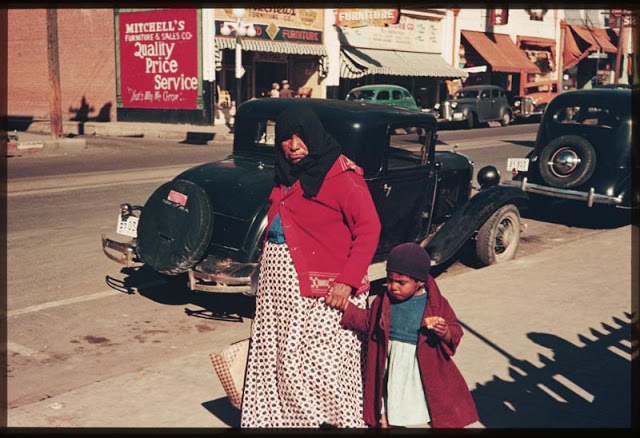
Tucson on Saturday afternoon, Arizona, Feb. 1940
Subscribe to continue reading
Become a paid subscriber to get access to the rest of this post and other exclusive content.
“First Blood,” released on October 22, 1982, tells the story of John Rambo, a troubled Vietnam War veteran struggling to reintegrate into civilian life. Arriving in the small town of Hope, Washington, Rambo seeks out his former commanding officer, only to find him deceased. Harassed by the local sheriff, Will Teasle, Rambo is arrested and subjected to brutal treatment, triggering flashbacks of his traumatic wartime experiences as a prisoner of war.
Enraged and traumatized, Rambo escapes from custody and flees into the surrounding wilderness. Teasle, determined to capture him, mobilizes a massive manhunt involving local police, the National Guard, and helicopter gunships. Using his exceptional combat and survival skills honed during the war, Rambo wages a guerrilla war against his pursuers, inflicting heavy casualties while evading capture.
As the body count rises and the situation escalates, Teasle begins to understand the depth of Rambo’s suffering and the injustice he has endured. Ultimately, Rambo’s former commanding officer, Colonel Samuel Trautman, intervenes to de-escalate the conflict. Trautman, recognizing the psychological scars of war in Rambo, helps him surrender peacefully. “First Blood” explores the complex themes of post-traumatic stress disorder, the struggles of veterans returning from war, and the dehumanizing effects of violence.
“First Blood” was a significant box office success.
Financial Triumph: Despite a modest budget of $15 million, the film grossed over $125 million worldwide.
Critical Recognition: While initial reviews were mixed, the film has since gained critical acclaim and is considered a classic action film.
Cultural Impact: The film launched Sylvester Stallone to superstardom and established the character of John Rambo as an iconic figure in popular culture.
Franchise Launchpad: “First Blood” spawned a successful franchise, with four sequels following its release.
The film’s success can be attributed to several factors, including Stallone’s powerful performance, the gripping story, and the intense action sequences.
Subscribe to our Page and receive notifications of new posts automatically so you do not miss a thing – it is free!!!
Please consider supporting our ongoing efforts to bring you, our valued readers, engaging and thoughtful historical content. Your monthly financial support goes a long way in helping us to continue to survive and move forward – just click on the “Subscribe” button to sign up for monthly giving. Or, If You Would Like, You Can Make a One-Time Donation If you enjoy my history content, you can support my work with a donation at https://www.buymeacoffee.com/YesterdayToday
If you buy something through our site, we might earn a commission, but this will not affect the price you pay for the item.
Thank You For Considering to Support Us.
Michael
Yesterday Today
Subscribe to get access
Read more of this content when you subscribe today.
From lighting a real candle on the branch of an indoor Christmas tree, to a well-dressed family singing carols on a stairwell in the home, this lovely collection of nostalgic photos reveal how children from a bygone era celebrated the festive season.
A little girl and her Saint Bernard deliver Christmas, ca. 1910s
Subscribe to continue reading
Become a paid subscriber to get access to the rest of this post and other exclusive content.
The Christmas Truce of 1914 stands as one of the most poignant moments of World War I, highlighting the shared humanity amidst the horrors of war. This brief cessation of hostilities occurred along the Western Front during the first Christmas of the conflict, bringing together German and British soldiers in an unexpected and touching display of goodwill.
As December 1914 approached, the Great War was just a few months old, but it had already devolved into the grim reality of trench warfare. The soldiers of both sides found themselves entrenched in muddy, cold, and miserable conditions, separated by a mere stretch of no-man’s-land. The harsh conditions and the omnipresent threat of death had taken a toll on the morale of the men, making the holiday season an even more stark contrast to the pre-war days of peace and family gatherings.
On Christmas Eve, an extraordinary event began to unfold. German soldiers, stationed along the Western Front, started decorating their trenches with candles and Christmas trees. They sang carols, and their voices carried across no-man’s-land to the British trenches. Initially, there was a sense of disbelief among the British soldiers. However, as the carol singing continued, they responded with their own carols. The shared music created a bond, and soon both sides were shouting Christmas greetings to each other.
On Christmas Day, the informal truce became even more tangible. Soldiers on both sides ventured out of their trenches and met in no-man’s-land, shaking hands and exchanging small gifts such as food, tobacco, and souvenirs. Some accounts even mention impromptu games of soccer being played, symbolizing a brief return to normalcy and camaraderie. The scene was surreal: men who had been trying to kill each other just days before were now laughing, singing, and mingling as if they were old friends.
Captain Robert Miles, King’s Shropshire Light Infantry, who was attached to the Royal Irish Rifles recalled in an edited letter that was published in the Daily Mail and the Wellington Journal & Shrewsbury News in January 1915, following his death in action on 30 December 1914:
Friday (Christmas Day). We are having the most extraordinary Christmas Day imaginable. A sort of unarranged and quite unauthorized but perfectly understood and scrupulously observed truce exists between us and our friends in front. The funny thing is it only seems to exist in this part of the battle line – on our right and left we can all hear them firing away as cheerfully as ever. The thing started last night – a bitter cold night, with white frost – soon after dusk when the Germans started shouting ‘Merry Christmas, Englishmen’ to us. Of course our fellows shouted back and presently large numbers of both sides had left their trenches, unarmed, and met in the debatable, shot-riddled, no man’s land between the lines. Here the agreement – all on their own – came to be made that we should not fire at each other until after midnight tonight. The men were all fraternizing in the middle (we naturally did not allow them too close to our line) and swapped cigarettes and lies in the utmost good fellowship. Not a shot was fired all night.
Of the Germans he wrote: “They are distinctly bored with the war…. In fact, one of them wanted to know what on earth we were doing here fighting them.” The truce in that sector continued into Boxing Day; he commented about the Germans, “The beggars simply disregard all our warnings to get down from off their parapet, so things are at a deadlock. We can’t shoot them in cold blood…. I cannot see how we can get them to return to business.”
The Christmas Truce was not an official ceasefire, and it was not observed uniformly across the front. In some sectors, fighting continued as usual, while in others, the truce lasted for several days. High command on both sides was not pleased with this spontaneous outbreak of peace, fearing it could undermine the soldiers’ willingness to fight. Orders were given to resume hostilities, and by New Year’s, the war had resumed its relentless grind.
The Christmas Truce of 1914 was significant not only because it provided a brief respite from the brutality of war but also because it underscored the shared humanity of the soldiers. It showed that, despite the propaganda and the dehumanization of the enemy, the men in the trenches recognized each other as fellow human beings, capable of compassion and kindness. The truce remains a powerful symbol of hope and peace, a reminder that even in the darkest of times, the light of humanity can shine through.
In the years that followed, the war only grew more brutal, and similar truces became less likely. The Christmas Truce of 1914 remains a unique and poignant chapter in the history of World War I, illustrating the potential for empathy and understanding even amid the most bitter of conflicts. Its legacy continues to inspire and remind us of the possibilities for peace and reconciliation in our own troubled times.
Subscribe to get access
Read more of this content when you subscribe today.
Please help us to continue our work bringing you the best in history on a daily basis. The cost of subscriptions to journals, archives and other media is expensive. We also have the added internet costs. You can help us by subscribing to this page for $5 per month or if you like you can make a one-time donation at https://www.buymeacoffee.com/YesterdayToday
Thank you for your consideration.
Yesterday Today
Subscribe to get access
Read more of this content when you subscribe today.
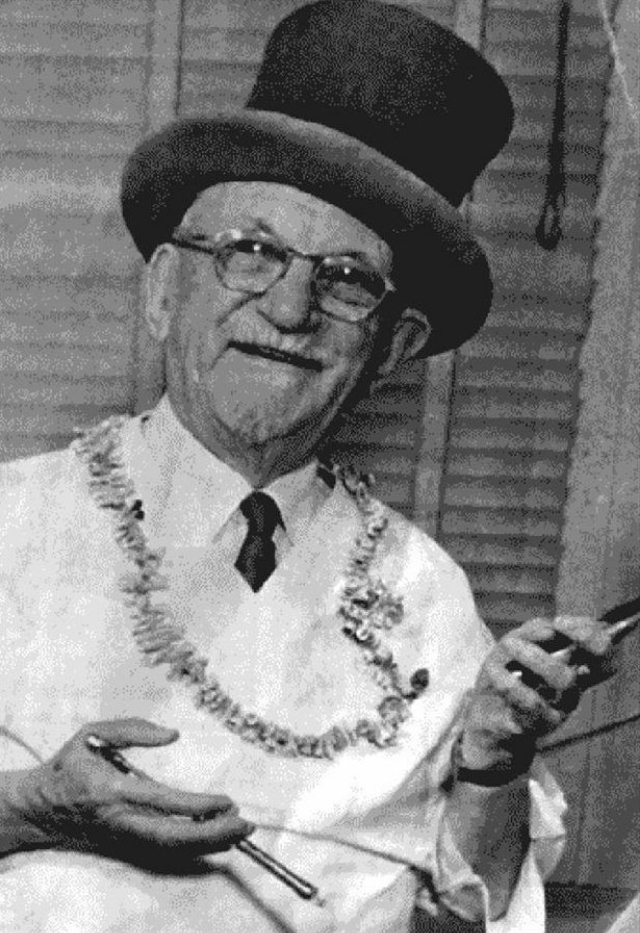
Before local anesthesia could manage the pain, one early 20th century dentist distracted his patients with showgirls and brass bands. Painless Parker found that a bit of the old razzle dazzle not only added enough commotion to keep a person from focusing too much on a tooth pulling, it drew an audience of prospective patients.
Painless Parker with his necklace of teeth; the necklace in the Dental Museum at Temple University.
Subscribe to continue reading
Become a paid subscriber to get access to the rest of this post and other exclusive content.
Please help us to continue our work bringing you the best in history on a daily basis. The cost of subscriptions to journals, archives and other media is expensive. We also have the added internet costs. You can help us by subscribing to this page for $5 per month or if you like you can make a one-time donation at https://www.buymeacoffee.com/YesterdayToday
Thank you for your consideration.
Yesterday Today
Subscribe to get access
Read more of this content when you subscribe today.
Please help us to continue our work bringing you the best in history on a daily basis. The cost of subscriptions to journals, archives and other media is expensive. We also have the added internet costs. You can help us by subscribing to this page for $5 per month or if you like you can make a one-time donation at https://www.buymeacoffee.com/YesterdayToday
Thank you for your consideration.
Yesterday Today
Subscribe to get access
Read more of this content when you subscribe today.
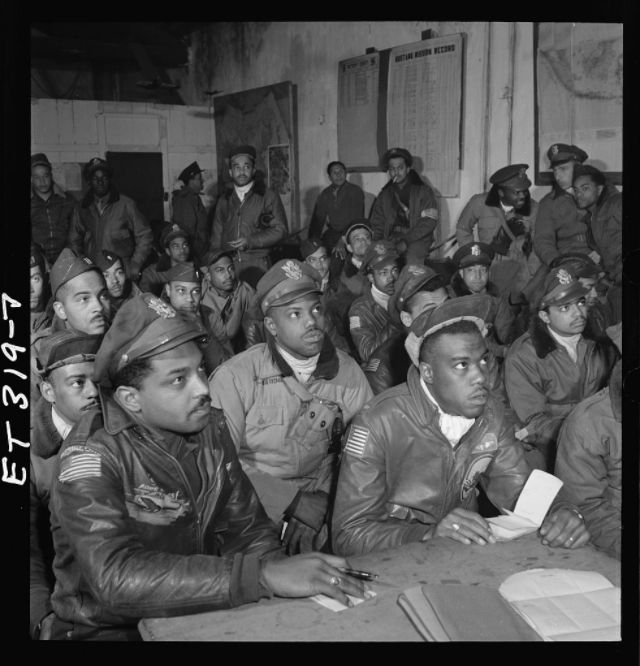
The Tuskegee Airmen were a group of primarily African American military pilots (fighter and bomber) and airmen who fought in World War II. They formed the 332d Fighter Group and the 477th Bombardment Group (Medium) of the United States Army Air Forces (USAAF). The name also applies to the navigators, bombardiers, mechanics, instructors, crew chiefs, nurses, cooks, and other support personnel. The Tuskegee airmen received praise for their excellent combat record earned while protecting American bombers from enemy fighters. The group was awarded three Distinguished Unit Citations.
All black military pilots who trained in the United States trained at Griel Field, Kennedy Field, Moton Field, Shorter Field, and the Tuskegee Army Air Fields. They were educated at the Tuskegee Institute (now Tuskegee University), located near Tuskegee, Alabama. Of the 922 pilots, five were Haitians from the Haitian Air Force and one pilot was from Trinidad. It also included a Hispanic or Latino airman born in the Dominican Republic.
The 99th Pursuit Squadron (later the 99th Fighter Squadron) was the first black flying squadron, and the first to deploy overseas (to North Africa in April 1943, and later to Sicily and other parts of Italy). The 332nd Fighter Group, which originally included the 100th, 301st and 302nd Fighter Squadrons, was the first black flying group. It deployed to Italy in early 1944. Although the 477th Bombardment Group trained with North American B-25 Mitchell bombers, they never served in combat. In June 1944, the 332nd Fighter Group began flying heavy bomber escort missions and, in July 1944, with the addition of the 99th Fighter Squadron, it had four fighter squadrons.
The 99th Fighter Squadron was initially equipped with Curtiss P-40 Warhawk fighter-bomber aircraft. The 332nd Fighter Group and its 100th, 301st and 302nd Fighter Squadrons were equipped for initial combat missions with Bell P-39 Airacobras (March 1944), later with Republic P-47 Thunderbolts (June–July 1944) and finally with the aircraft with which they became most commonly associated, the North American P-51 Mustang (July 1944). When the pilots of the 332nd Fighter Group painted the tails of their P-47s red, the nickname “Red Tails” was coined. The red markings that distinguished the Tuskegee Airmen included red bands on the noses of P-51s as well as a red rudder; the P-51B, C and D Mustangs flew with similar color schemes, with red propeller spinners, yellow wing bands and all-red tail surfaces.
The Tuskegee Airmen were the first African-American military aviators in the United States Armed Forces. During World War II, black Americans in many U.S. states were still subject to the Jim Crow laws and the American military was racially segregated, as was much of the federal government. The Tuskegee Airmen were subjected to discrimination, both within and outside of the army. (Wikipedia)
These intimate portraits were taken by Toni Frissell, a high-fashion photographer who volunteered her photographic services to the American Red Cross, Women’s Army Corps, and Eighth Army Air Force during WWII. On volunteering for the American Red Cross in 1941, Frissell said: “I became so frustrated with fashions that I wanted to prove to myself that I could do a real reporting job.” Take a look:
Several Tuskegee airmen attending a briefing in Ramitelli, Italy, March 1945
Subscribe to continue reading
Become a paid subscriber to get access to the rest of this post and other exclusive content.
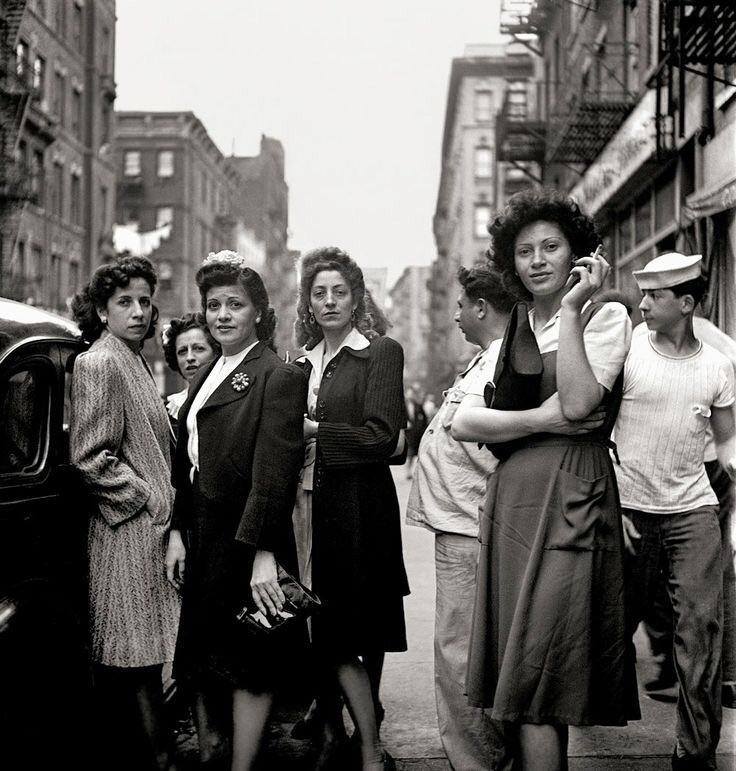
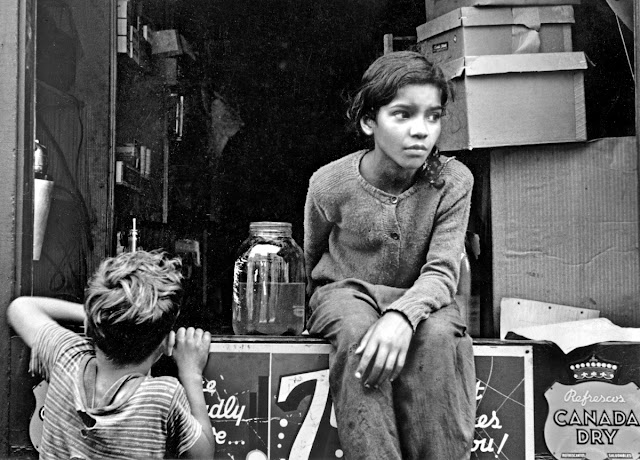
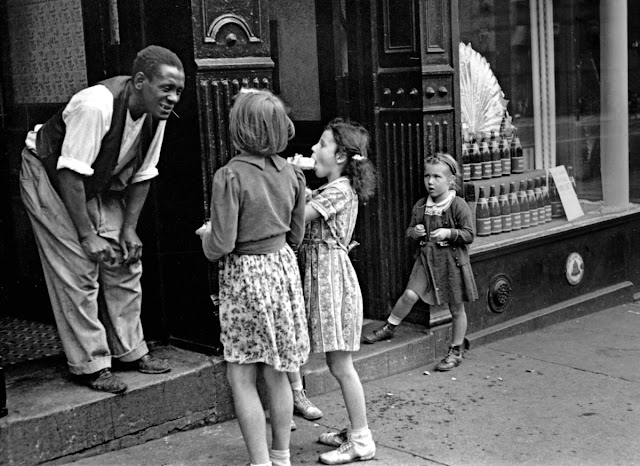
In the late 1930s, photographer Helen Levitt rode the New York City subway system, first as an apprentice to photographer Walker Evans, then snapping photos of aloof passengers wearing fur coats, flat-brim hats, and antique brooches.
Yet for the majority of Levitt’s illustrious career (lasting until the 1990s), she ventured out of the underground to document life on Manhattan streets. She captured authentic moments — children playing on the sidewalk or dressing up for Halloween, a group of women gossiping — in neighborhoods including Harlem, the Lower East Side, and the Garment District.
Levitt spoke about her early pictures shot on the streets in the 1930s: “It was a good neighborhood for taking pictures in those days, because that was before television. There was a lot happening. And the older people would be sitting out on the stoops because of the heat. Those neighborhoods were very active.”
The New York Times, in 2009, described her as: “a major photographer of the 20th century who caught fleeting moments of surpassing lyricism, mystery and quiet drama on the streets of her native New York”.
New York, often called New York City (NYC) to distinguish it from the State of New York, is the most populous city in the United States. With a 2020 population of 8,804,190 distributed over 300.46 square miles (778.2 km2), New York City is also the most densely populated major city in the United States. Located at the southern tip of New York State, the city is the center of the New York metropolitan area, the largest metropolitan area in the world by urban landmass. With over 20.1 million people in its metropolitan statistical area and 23.5 million in its combined statistical area as of 2020, New York is one of the world’s most populous megacities. New York City is a global cultural, financial, and media center with a significant influence on commerce, entertainment, research, technology, education, politics, tourism, dining, art, fashion, and sports. New York is the most photographed city in the world. Home to the headquarters of the United Nations, New York is an important center for international diplomacy, an established safe haven for global investors, and is sometimes described as the capital of the world.
Situated on one of the world’s largest natural harbors, with water covering 36.4% of its surface area, New York City is composed of five boroughs, each of which is coextensive with a respective county of the state of New York. The five boroughs—Brooklyn (Kings County), Queens (Queens County), Manhattan (New York County), the Bronx (Bronx County), and Staten Island (Richmond County)—were created when local governments were consolidated into a single municipal entity in 1898.The city and its metropolitan area constitute the premier gateway for legal immigration to the United States. As many as 800 languages are spoken in New York, making it the most linguistically diverse city in the world. New York is home to more than 3.2 million residents born outside the United States, the largest foreign-born population of any city in the world as of 2016. As of 2018, the New York metropolitan area is estimated to produce a gross metropolitan product (GMP) of nearly $1.8 trillion, ranking it first in the United States. If the New York metropolitan area were a sovereign state, it would have the eighth-largest economy in the world. New York is home to the highest number of billionaires of any city in the world.
New York City traces its origins to a trading post founded on the southern tip of Manhattan Island by Dutch colonists in approximately 1624. The settlement was named New Amsterdam (Dutch: Nieuw Amsterdam) in 1626 and was chartered as a city in 1653. The city came under English control in 1664 and was renamed New York after King Charles II of England granted the lands to his brother, the Duke of York. The city was regained by the Dutch in July 1673 and was renamed New Orange for one year and three months; the city has been continuously named New York since November 1674. New York City was the capital of the United States from 1785 until 1790, and has been the largest U.S. city since 1790. The Statue of Liberty greeted millions of immigrants as they came to the U.S. by ship in the late 19th and early 20th centuries, and is a symbol of the U.S. and its ideals of liberty and peace. In the 21st century, New York has emerged as a global node of creativity, entrepreneurship, and environmental sustainability, and as a symbol of freedom and cultural diversity.The New York Times has won the most Pulitzer Prizes for journalism and remains the U.S. media’s “newspaper of record”.In 2019, New York was voted the greatest city in the world per a survey of over 30,000 people from 48 cities worldwide, citing its cultural diversity.
Many districts and monuments in New York City are major landmarks, including three of the world’s ten most visited tourist attractions in 2013. A record 66.6 million tourists visited New York City in 2019. Times Square is the brightly illuminated hub of the Broadway Theater District, one of the world’s busiest pedestrian intersections, and a major center of the world’s entertainment industry. Many of the city’s landmarks, skyscrapers, and parks are known around the world, as is the city’s fast pace, spawning the term New York minute. The Empire State Building has become the global standard of reference to describe the height and length of other structures. Manhattan’s real estate market is among the most expensive in the world. Providing continuous 24/7 service and contributing to the nickname The City That Never Sleeps, the New York City Subway is the largest single-operator rapid transit system worldwide, with 472 passenger rail stations; and Penn Station in Midtown Manhattan is the busiest transportation hub in the Western Hemisphere. The city has over 120 colleges and universities, including Columbia University, New York University, and the City University of New York system, which is the largest urban public university system in the United States. Anchored by Wall Street in the Financial District of Lower Manhattan, New York City has been called both the world’s leading financial center and the most powerful city in the world, and is home to the world’s two largest stock exchanges by total market capitalization, the New York Stock Exchange and Nasdaq. (Wikipedia)
Subscribe to continue reading
Become a paid subscriber to get access to the rest of this post and other exclusive content.
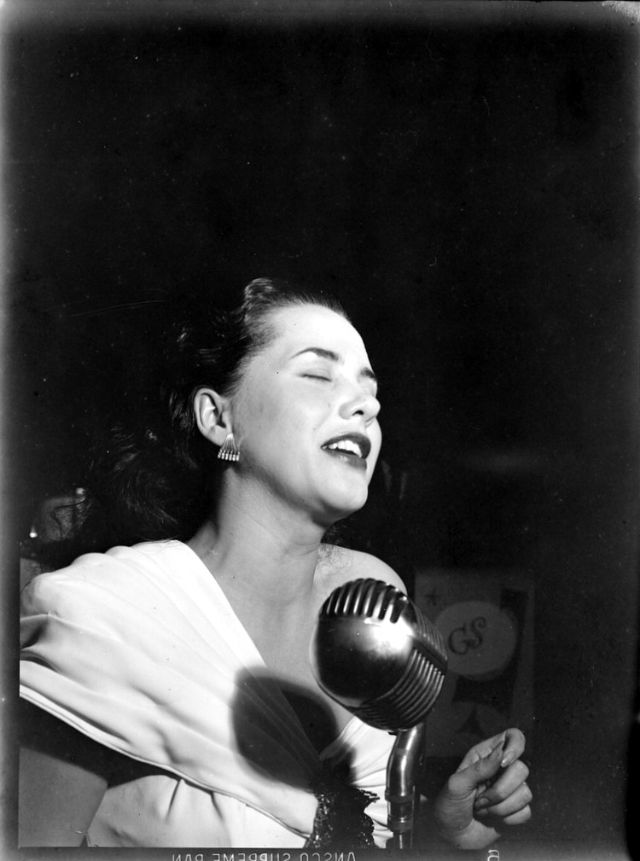
William Paul Gottlieb (1917-2006) was an American photographer and newspaper columnist who is best known for his classic photographs of the leading performers of the “Golden Age” of American jazz in the 1930s and 1940s. Gottlieb’s photographs are among the best known and widely reproduced images of this era of jazz.
During the course of his career, Gottlieb took portraits of hundreds of prominent jazz musicians and personalities, typically while they were playing or singing at well-known New York City jazz clubs. Well-known musicians Gottlieb photographed included Louis Armstrong, Duke Ellington, Charlie Parker, Billie Holiday, Dizzy Gillespie, Earl Hines, Jo Stafford, Thelonious Monk, Stan Kenton, Ray McKinley, Benny Goodman, Coleman Hawkins, Louis Jordan, Ella Fitzgerald, Toots Thielemans, and Benny Carter.
These selected photos from his work are portraits of female jazz artists that he took from the 1940s in New York.
Billie Holiday, Downbeat, New York, Feb. 1947
Subscribe to continue reading
Become a paid subscriber to get access to the rest of this post and other exclusive content.
In 1940, Jackson Doane, of Binghamton, unearthed a packet of letters, a ring and a picture in his family’s attic from Sarah Rosetta Wakeman, the older sister of Jackson’s great-grandmother. She was a family member that seemed to be little spoken about — and little known. In 1976, Jackson read those letters, discovering that they were letters of a woman passing herself off as a man while serving in the Civil War.
Portrait of Sarah Rosetta Wakeman.
Subscribe to continue reading
Become a paid subscriber to get access to the rest of this post and other exclusive content.
The rollout of General Motors’ broad lineup of “X-Car” compact cars for 1980–which consisted of four separate vehicle lines spread across four brands–was a big event in the American automotive industry. Not surprisingly, GM backed up its ambitious new product initiative with a massive presence in TV and magazine advertising.
The rollout of General Motors’ broad lineup of “X-Car” compact cars for 1980–which consisted of four separate vehicle lines spread across four brands–was a big event in the American automotive industry. Not surprisingly, GM backed up its ambitious new product initiative with a massive presence in TV and magazine advertising.
Though launched almost at the same time in 1979, the Buick Skylark, Chevrolet Citation, Oldsmobile Omega, and Pontiac Phoenix were all 1980 models, and the media blitz lasted throughout that calendar year. Here, a collection of 10 classic automotive print ads from 1980:
1980 Dodge Aspen
Subscribe to continue reading
Become a paid subscriber to get access to the rest of this post and other exclusive content.
Life in Nazi Germany, 1933-1939 Alongside control and suppression, the Nazis tried to influence every part of German life.
The economy Hitler claimed that he had dramatically reduced unemployment figures under the Nazis. Certainly, rearmament created jobs. But National Service meant young men were not counted as being unemployed any longer. Women and Jews were left out of the figures altogether. Therefore, we can’t be sure of how many people truly found jobs under the Nazis. However, living standards for working class Germans did not really improve and workers were expected to take part in Nazi Party schemes like Strength Through Joy, which gave them cheap holidays, in return for giving up their trade union rights.
The Nazis aspired to achieve autarky, or economic self-sufficiency, but in general the economy was geared towards preparing for a future war. As such, workers were expected to work long hours for modest pay and to toe the line.
Social policy The Nazis’ social policies affected two groups in society the most – women and young people:
Women were expected to embrace a life based around the ‘3 Ks’ of Kinder, Küche, Kirche (Children, Kitchen and Church). It was their duty to produce and raise children, in order to secure the future of the Reich. They were encouraged to give up work and received loans and awards for having lots of children. Young people were a particular target for the Nazis’ propaganda, as they represented the future. The school curriculum was altered to promote Nazi ideology and all young people were expected to join a Nazi youth organisation such as the Hitler Youth or the League of German Maidens. In addition, the Nazis sought to control or limit the influence of Christianity. They set up an official state church, called the Reich Church, which adapted protestant teachings to Nazi ideology. Also, despite signing a Concordat with the Pope in 1933 in which Hitler promised to leave the Catholic Church alone if it stayed out of politics, the Nazis attempted to interfere with it and placed restrictions on worship.
Persecution Nazi ideology centred on the belief that the Aryan of northern Europe was superior to all others and that some races were sub-human. Nazis also believed any weaknesses in the Aryan race, such as disabled people, should be weeded out to maintain racial purity. Therefore, many groups who the Nazis did not like were targeted and persecuted. This was done in many different ways; ‘euthanasia’, imprisonment in concentration camps and the loss of civil rights.
The group targeted most by this persecution were the Jews. Under the Nazis Jews in Germany had their rights gradually taken away, including their German citizenship. During World War Two, this deteriorated further and the Holocaust saw 6 million Jews from across Nazi-occupied Europe murdered.
Subscribe to continue reading
Become a paid subscriber to get access to the rest of this post and other exclusive content.
Street kids at play, Georgetown, Washington D.C., Summer 1935
The Great Depression was the worst economic downturn in the history of the industrialized world, lasting from 1929 to 1939. It began after the stock market crash of October 29, 1929, the “Black Tuesday”, which sent Wall Street into a panic and wiped out millions of investors.
Over the next several years, consumer spending and investment dropped, causing steep declines in industrial output and employment as failing companies laid off workers. By 1933, when the Great Depression reached its lowest point, some 15 million Americans were unemployed and nearly half the country’s banks had failed.
The end to the Great Depression came about in 1941 with America’s entry into World War II. America sided with Britain, France and the Soviet Union against Germany, Italy, and Japan. The loss of lives in this war was staggering.
The European part of the war ended with Germany’s surrender in May 1945. Japan surrendered in September 1945, after the U.S. dropped atomic bombs on Hiroshima and Nagasaki.
These incredible vintage photos were colorized by Lamont Cranston that revived life of the U.S. in the 1930s and 1940s.
Street smart, Washington, D.C., 1935
Subscribe to continue reading
Become a paid subscriber to get access to the rest of this post and other exclusive content.
In the 1960s, it wasn’t just the fashion that was groovy and out there – interiors and architecture reflected trends of the time, too. One room that really received unique features during the 1960s were kitchens. Whether it was floor-to-ceiling woodwork or chartreuse laminate countertops, kitchens were far from boring during this era.
The biggest improvement of modern kitchen design in the 1960s is considered to be the work triangle layout, consisting of three connected work areas – the stove, sink and the refrigerator. This essential model is an example of a highly utilitarian and effective design that remains a key aspect in kitchen planning to this day.
Shag rugs, minimalist furniture, and kooky colors were all the rage of the kitchens in this period. These vintage photos captured people at their kitchens from the 1960s.
Subscribe to continue reading
Become a paid subscriber to get access to the rest of this post and other exclusive content.
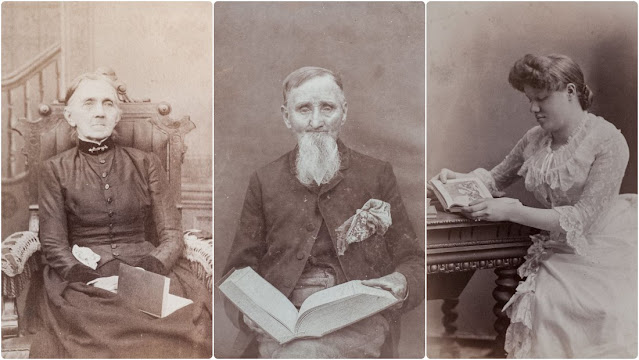
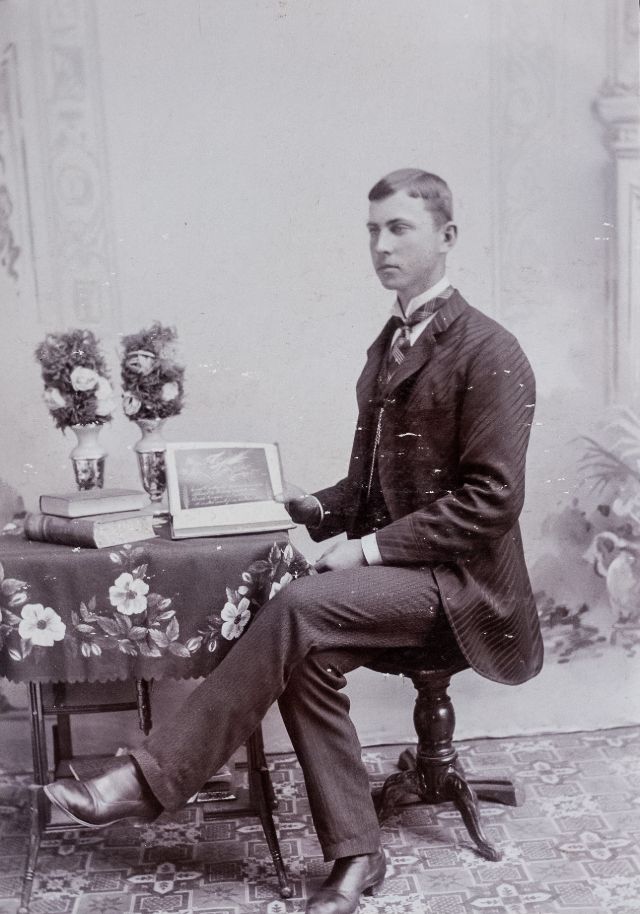
Victorians were great readers of the novel, and the number of novels available for them to read increased enormously during Victoria’s reign.
The activity of reading benefited hugely from wider schooling and increased literacy rates, from the cheapening costs of publication, from improved distribution that resulted from better transportation, and, towards the end of the century, from the arrival of gas and electric lighting in homes, which meant that reading after dark no longer had to take place by candlelight or oil lamp.
Here below is a set of amazing photos that show Victorian people posing with their books.
Subscribe to continue reading
Become a paid subscriber to get access to the rest of this post and other exclusive content.
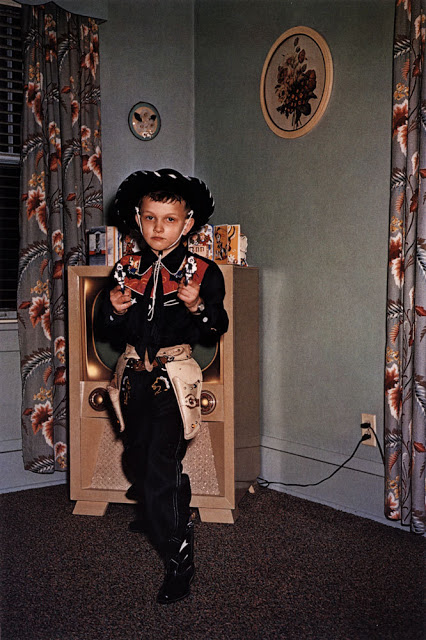
Introduced in 1935 as the first modern color film, Kodachrome was used extensively after World War II by amateur photographers equipped with the new high-quality and low cost 35mm cameras. Americans in Kodachrome 1945-1965 is an unprecedented portrayal of the daily life of the people during these formative years of modern American culture. It is comprised of ninety-five exceptional color photographs made by over ninety unknown American photographers.
These photographs were chosen from many thousands of slides in hundreds of collections. Like folk art in other mediums, this work is characterized by its frankness, honesty, and vigor. Made as memoirs of family and friends, the photographs reveal a free-spirited, intuitive approach, and possess a clarity and unpretentiousness characteristic of this unheralded photographic folk art.
Cowboy Kid, St. Cloud, Minnesota, 1955
Subscribe to continue reading
Become a paid subscriber to get access to the rest of this post and other exclusive content.
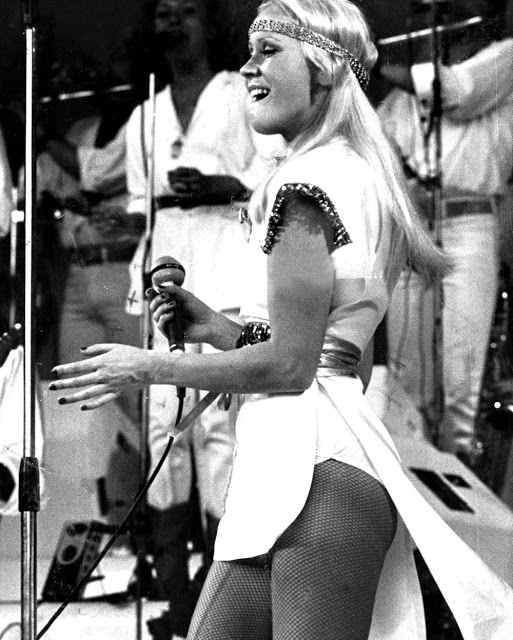
ABBA are a Swedish pop group formed in Stockholm in 1972 by Agnetha Fältskog, Björn Ulvaeus, Benny Andersson, and Anni-Frid Lyngstad. The group’s name is an acronym of the first letters of their first names. Widely considered one of the greatest musical groups of all time, they became one of the most commercially successful acts in the history of popular music, topping the charts worldwide from 1974 to 1983. They have achieved 44 hit singles.
In 1974, ABBA were Sweden’s first winner of the Eurovision Song Contest with the song “Waterloo”, which in 2005 was chosen as the best song in the competition’s history as part of the 50th anniversary celebration of the contest. During the band’s main active years, it consisted of two married couples: Fältskog and Ulvaeus, and Lyngstad and Andersson. With the increase of their popularity, their personal lives suffered, which eventually resulted in the collapse of both marriages. The relationship changes were reflected in the group’s music, with latter compositions featuring darker and more introspective lyrics. After ABBA disbanded, Andersson and Ulvaeus continued their success writing music for the stage, while Fältskog and Lyngstad and pursued solo careers.
Ten years after the group disbanded, a compilation, ABBA Gold, was released, becoming a worldwide best-seller. In 1999, ABBA’s music was adapted into Mamma Mia!, a successful musical that toured worldwide. A film of the same name, released in 2008, became the highest-grossing film in the United Kingdom that year. A sequel, Mamma Mia! Here We Go Again, was released in 2018. That same year it was also announced that the band had reunited and recorded two new songs after 35 inactive years, which were released in September 2021 as the lead singles from Voyage, their first studio album in 40 years, to be released in November 2021. A concert residency featuring ABBA as virtual avatars – dubbed ‘ABBAtars’ to support the album will take place from May to September 2022.
They are one of the best-selling music artists of all time, with sales estimated at 150 million records worldwide. In 2012, ABBA was ranked eighth-best-selling singles artists in the United Kingdom, with 11.2 million singles sold. ABBA were the first group from a non-English-speaking country to achieve consistent success in the charts of English-speaking countries, including the United States, United Kingdom, Republic of Ireland, Canada, Australia, New Zealand, The Philippines and South Africa. They are the best-selling Swedish band of all time and one of the best-selling bands originating in continental Europe. ABBA had eight consecutive number-one albums in the UK. The group also enjoyed significant success in Latin America, and recorded a collection of their hit songs in Spanish. The group was inducted into the Rock and Roll Hall of Fame in 2010. In 2015, their song “Dancing Queen” was inducted into the Recording Academy’s Grammy Hall of Fame.
Subscribe to continue reading
Become a paid subscriber to get access to the rest of this post and other exclusive content.
Edith Norma Shearer (August 10, 1902 – June 12, 1983) was a Canadian actress who was active on film from 1919 through 1942. Shearer often played spunky, sexually liberated ingénues. She appeared in adaptations of Noël Coward, Eugene O’Neill, and William Shakespeare, and was the first five-time Academy Award acting nominee, winning Best Actress for The Divorcee (1930).
Reviewing Shearer’s work, Mick LaSalle called her “the exemplar of sophisticated 1930s womanhood … exploring love and sex with an honesty that would be considered frank by modern standards”. He described her as a feminist pioneer, “the first American film actress to make it chic and acceptable to be single and not a virgin on screen”.
She won a beauty contest at age fourteen. In 1920 her mother, Edith Shearer, took Norma and her sister Athole Shearer (Mrs. Howard Hawks) to New York. Ziegfeld rejected her for his “Follies,” but she got work as an extra in several movies. She spent much money on eye doctor’s services trying to correct her cross-eyed stare caused by a muscle weakness. Irving Thalberg had seen her early acting efforts and, when he joined Louis B. Mayer in 1923, gave her a five year contract. He thought she should retire after their marriage, but she wanted bigger parts. In 1927, she insisted on firing the director Viktor Tourjansky because he was unsure of her cross-eyed stare. Her first talkie was in The Trial of Mary Dugan (1929); four movies later, she won an Oscar in The Divorcee (1930). She intentionally cut down film exposure during the 1930s, relying on major roles in Thalberg’s prestige projects: The Barretts of Wimpole Street (1934) and Romeo and Juliet (1936) (her fifth Oscar nomination). Thalberg died of a second heart attack in September, 1936, at age 37. Norma wanted to retire, but MGM more-or-less forced her into a six-picture contract. David O. Selznick offered her the part of Scarlett O’Hara in Gone with the Wind (1939), but public objection to her cross-eyed stare killed the deal. She starred in The Women (1939), turned down the starring role in Mrs. Miniver (1942), and retired in 1942. Later that year she married Sun Valley ski instructor Martin Arrouge, eleven years younger than she (he waived community property rights). From then on, she shunned the limelight; she was in very poor health the last decade of her life.
Shearer’s fame declined after her retirement in 1942. She was rediscovered in the late 1950s, when her films were sold to television, and in the 1970s, when her films enjoyed theatrical revivals. By the time of her death in 1983, she was best known for her “noble” roles in Marie Antoinette and The Women.
A Shearer revival began in 1988, when Turner Network Television began broadcasting the entire Metro-Goldwyn-Mayer film library. In 1994, Turner Classic Movies began showcasing her films, most of which had not been seen since the reconstitution of the Production Code in 1934. Shearer’s work was seen anew, and the critical focus shifted from her “noble” roles to her pre-Code roles.
Even for a pampered star, her output in the sound era is strikingly meager. And yet this was part of her undeniable aura – that she did not make movies lightly and frivolously, but with great care, sincerity and conviction.
Shearer’s work gained more attention in the 1990s through the publication of a series of books. The first was a biography by Gavin Lambert. Next came Complicated Women: Sex and Power in Pre-Code Hollywood by Mick LaSalle, film critic at the San Francisco Chronicle. Mark A. Vieira published three books on subjects closely related to Shearer: a biography of her husband, producer Irving Thalberg; and two biographies of photographer George Hurrell. Shearer was noted not only for the control she exercised over her work, but also for her patronage of Hurrell and Adrian, and for discovering actress Janet Leigh and actor-producer Robert Evans.
For her contribution to the motion-picture industry, Shearer has a star on the Hollywood Walk of Fame, at 6636 Hollywood Boulevard. On June 30, 2008, Canada Post issued a postage stamp in its “Canadians in Hollywood” series to honour Norma Shearer, along with others for Raymond Burr, Marie Dressler, and Chief Dan George.
Shearer and Thalberg are reportedly the models for Stella and Miles, the hosts of the Hollywood party in the short story “Crazy Sunday” (1932) by F. Scott Fitzgerald.
Most of Shearer’s MGM films are broadcast on Turner Classic Movies, and many of them are also available on DVD from Warner Home Video. In 2008, she was inducted into Canada’s Walk of Fame. In 2015, a number of Shearer films became available in high-definition format, authored by Warner Home Video, in most cases, from the nitrate camera negatives: A Free Soul, Romeo and Juliet, Marie Antoinette, and The Women.
Subscribe to continue reading
Become a paid subscriber to get access to the rest of this post and other exclusive content.
The wedding day was considered to be the most important day in the life of a Victorian girl. The girls were taught from the early age to marry and to take care of the family. The marriage of a girl was something very special for the mother, the soon to be bride and her family.
Victorian weddings were more or less similar to the wedding celebrations we have today. Many traditions of Victorian weddings are still being followed and one of them is the color and style of the wedding attire.
The wedding dress of the Victorian era had a fitted bodice with a small waist and long skirt. It was made of organdie, silk, linen, lace, gauze, tulle and cashmere.
The wedding was also very important for the grooms and they were also concerned with fashion. The Victorian groom often wore a frock coat made of blue color with best flower favor in his lapel.
Take a look at these beautiful photos to see what Victorian couples looked like on their wedding days.
Subscribe to continue reading
Become a paid subscriber to get access to the rest of this post and other exclusive content.
In 1940, Jackson Doane, of Binghamton, unearthed a packet of letters, a ring and a picture in his family’s attic from Sarah Rosetta Wakeman, the older sister of Jackson’s great-grandmother. She was a family member that seemed to be little spoken about — and little known. In 1976, Jackson read those letters, discovering that they were letters of a woman passing herself off as a man while serving in the Civil War.
Portrait of Sarah Rosetta Wakeman.
Subscribe to continue reading
Become a paid subscriber to get access to the rest of this post and other exclusive content.
Victorians were great readers of the novel, and the number of novels available for them to read increased enormously during Victoria’s reign.
The activity of reading benefited hugely from wider schooling and increased literacy rates, from the cheapening costs of publication, from improved distribution that resulted from better transportation, and, towards the end of the century, from the arrival of gas and electric lighting in homes, which meant that reading after dark no longer had to take place by candlelight or oil lamp.
Here below is a set of amazing photos that show Victorian people posing with their books.
Subscribe to continue reading
Become a paid subscriber to get access to the rest of this post and other exclusive content.
In the 1960s, it wasn’t just the fashion that was groovy and out there – interiors and architecture reflected trends of the time, too. One room that really received unique features during the 1960s were kitchens. Whether it was floor-to-ceiling woodwork or chartreuse laminate countertops, kitchens were far from boring during this era.
The biggest improvement of modern kitchen design in the 1960s is considered to be the work triangle layout, consisting of three connected work areas – the stove, sink and the refrigerator. This essential model is an example of a highly utilitarian and effective design that remains a key aspect in kitchen planning to this day.
Shag rugs, minimalist furniture, and kooky colors were all the rage of the kitchens in this period. These vintage photos captured people at their kitchens from the 1960s.
Subscribe to continue reading
Become a paid subscriber to get access to the rest of this post and other exclusive content.
Street kids at play, Georgetown, Washington D.C., Summer 1935
The Great Depression was the worst economic downturn in the history of the industrialized world, lasting from 1929 to 1939. It began after the stock market crash of October 29, 1929, the “Black Tuesday”, which sent Wall Street into a panic and wiped out millions of investors.
Over the next several years, consumer spending and investment dropped, causing steep declines in industrial output and employment as failing companies laid off workers. By 1933, when the Great Depression reached its lowest point, some 15 million Americans were unemployed and nearly half the country’s banks had failed.
The end to the Great Depression came about in 1941 with America’s entry into World War II. America sided with Britain, France and the Soviet Union against Germany, Italy, and Japan. The loss of lives in this war was staggering.
The European part of the war ended with Germany’s surrender in May 1945. Japan surrendered in September 1945, after the U.S. dropped atomic bombs on Hiroshima and Nagasaki.
These incredible vintage photos were colorized by Lamont Cranston that revived life of the U.S. in the 1930s and 1940s.
Street smart, Washington, D.C., 1935
Subscribe to continue reading
Become a paid subscriber to get access to the rest of this post and other exclusive content.
Life in Nazi Germany, 1933-1939 Alongside control and suppression, the Nazis tried to influence every part of German life.
The economy Hitler claimed that he had dramatically reduced unemployment figures under the Nazis. Certainly, rearmament created jobs. But National Service meant young men were not counted as being unemployed any longer. Women and Jews were left out of the figures altogether. Therefore, we can’t be sure of how many people truly found jobs under the Nazis. However, living standards for working class Germans did not really improve and workers were expected to take part in Nazi Party schemes like Strength Through Joy, which gave them cheap holidays, in return for giving up their trade union rights.
The Nazis aspired to achieve autarky, or economic self-sufficiency, but in general the economy was geared towards preparing for a future war. As such, workers were expected to work long hours for modest pay and to toe the line.
Social policy The Nazis’ social policies affected two groups in society the most – women and young people:
Women were expected to embrace a life based around the ‘3 Ks’ of Kinder, Küche, Kirche (Children, Kitchen and Church). It was their duty to produce and raise children, in order to secure the future of the Reich. They were encouraged to give up work and received loans and awards for having lots of children. Young people were a particular target for the Nazis’ propaganda, as they represented the future. The school curriculum was altered to promote Nazi ideology and all young people were expected to join a Nazi youth organisation such as the Hitler Youth or the League of German Maidens. In addition, the Nazis sought to control or limit the influence of Christianity. They set up an official state church, called the Reich Church, which adapted protestant teachings to Nazi ideology. Also, despite signing a Concordat with the Pope in 1933 in which Hitler promised to leave the Catholic Church alone if it stayed out of politics, the Nazis attempted to interfere with it and placed restrictions on worship.
Persecution Nazi ideology centred on the belief that the Aryan of northern Europe was superior to all others and that some races were sub-human. Nazis also believed any weaknesses in the Aryan race, such as disabled people, should be weeded out to maintain racial purity. Therefore, many groups who the Nazis did not like were targeted and persecuted. This was done in many different ways; ‘euthanasia’, imprisonment in concentration camps and the loss of civil rights.
The group targeted most by this persecution were the Jews. Under the Nazis Jews in Germany had their rights gradually taken away, including their German citizenship. During World War Two, this deteriorated further and the Holocaust saw 6 million Jews from across Nazi-occupied Europe murdered.
Subscribe to continue reading
Become a paid subscriber to get access to the rest of this post and other exclusive content.
The rollout of General Motors’ broad lineup of “X-Car” compact cars for 1980–which consisted of four separate vehicle lines spread across four brands–was a big event in the American automotive industry. Not surprisingly, GM backed up its ambitious new product initiative with a massive presence in TV and magazine advertising.
The rollout of General Motors’ broad lineup of “X-Car” compact cars for 1980–which consisted of four separate vehicle lines spread across four brands–was a big event in the American automotive industry. Not surprisingly, GM backed up its ambitious new product initiative with a massive presence in TV and magazine advertising.
Though launched almost at the same time in 1979, the Buick Skylark, Chevrolet Citation, Oldsmobile Omega, and Pontiac Phoenix were all 1980 models, and the media blitz lasted throughout that calendar year. Here, a collection of 10 classic automotive print ads from 1980:
1980 Dodge Aspen
Subscribe to continue reading
Become a paid subscriber to get access to the rest of this post and other exclusive content.
Please help us to continue our work bringing you the best in history on a daily basis. The cost of subscriptions to journals, archives and other media is expensive. We also have the added internet costs. You can help us by subscribing to this page for $5 per month or if you like you can make a one-time donation at https://www.buymeacoffee.com/YesterdayToday
Thank you for your consideration.
Yesterday Today
Subscribe to get access
Read more of this content when you subscribe today.
The Tuskegee Airmen were a group of primarily African American military pilots (fighter and bomber) and airmen who fought in World War II. They formed the 332d Fighter Group and the 477th Bombardment Group (Medium) of the United States Army Air Forces (USAAF). The name also applies to the navigators, bombardiers, mechanics, instructors, crew chiefs, nurses, cooks, and other support personnel. The Tuskegee airmen received praise for their excellent combat record earned while protecting American bombers from enemy fighters. The group was awarded three Distinguished Unit Citations.
All black military pilots who trained in the United States trained at Griel Field, Kennedy Field, Moton Field, Shorter Field, and the Tuskegee Army Air Fields. They were educated at the Tuskegee Institute (now Tuskegee University), located near Tuskegee, Alabama. Of the 922 pilots, five were Haitians from the Haitian Air Force and one pilot was from Trinidad. It also included a Hispanic or Latino airman born in the Dominican Republic.
The 99th Pursuit Squadron (later the 99th Fighter Squadron) was the first black flying squadron, and the first to deploy overseas (to North Africa in April 1943, and later to Sicily and other parts of Italy). The 332nd Fighter Group, which originally included the 100th, 301st and 302nd Fighter Squadrons, was the first black flying group. It deployed to Italy in early 1944. Although the 477th Bombardment Group trained with North American B-25 Mitchell bombers, they never served in combat. In June 1944, the 332nd Fighter Group began flying heavy bomber escort missions and, in July 1944, with the addition of the 99th Fighter Squadron, it had four fighter squadrons.
The 99th Fighter Squadron was initially equipped with Curtiss P-40 Warhawk fighter-bomber aircraft. The 332nd Fighter Group and its 100th, 301st and 302nd Fighter Squadrons were equipped for initial combat missions with Bell P-39 Airacobras (March 1944), later with Republic P-47 Thunderbolts (June–July 1944) and finally with the aircraft with which they became most commonly associated, the North American P-51 Mustang (July 1944). When the pilots of the 332nd Fighter Group painted the tails of their P-47s red, the nickname “Red Tails” was coined. The red markings that distinguished the Tuskegee Airmen included red bands on the noses of P-51s as well as a red rudder; the P-51B, C and D Mustangs flew with similar color schemes, with red propeller spinners, yellow wing bands and all-red tail surfaces.
The Tuskegee Airmen were the first African-American military aviators in the United States Armed Forces. During World War II, black Americans in many U.S. states were still subject to the Jim Crow laws and the American military was racially segregated, as was much of the federal government. The Tuskegee Airmen were subjected to discrimination, both within and outside of the army. (Wikipedia)
These intimate portraits were taken by Toni Frissell, a high-fashion photographer who volunteered her photographic services to the American Red Cross, Women’s Army Corps, and Eighth Army Air Force during WWII. On volunteering for the American Red Cross in 1941, Frissell said: “I became so frustrated with fashions that I wanted to prove to myself that I could do a real reporting job.” Take a look:
Several Tuskegee airmen attending a briefing in Ramitelli, Italy, March 1945
Subscribe to continue reading
Become a paid subscriber to get access to the rest of this post and other exclusive content.
Please help us to continue our work bringing you the best in history on a daily basis. The cost of subscriptions to journals, archives and other media is expensive. We also have the added internet costs. You can help us by subscribing to this page for $5 per month or if you like you can make a one-time donation at https://www.buymeacoffee.com/YesterdayToday
Thank you for your consideration.
Yesterday Today
Subscribe to get access
Read more of this content when you subscribe today.
Before local anesthesia could manage the pain, one early 20th century dentist distracted his patients with showgirls and brass bands. Painless Parker found that a bit of the old razzle dazzle not only added enough commotion to keep a person from focusing too much on a tooth pulling, it drew an audience of prospective patients.
Painless Parker with his necklace of teeth; the necklace in the Dental Museum at Temple University.
Subscribe to continue reading
Become a paid subscriber to get access to the rest of this post and other exclusive content.
Please help us to continue our work bringing you the best in history on a daily basis. The cost of subscriptions to journals, archives and other media is expensive. We also have the added internet costs. You can help us by subscribing to this page for $5 per month or if you like you can make a one-time donation at https://www.buymeacoffee.com/YesterdayToday
Thank you for your consideration.
Yesterday Today
Subscribe to get access
Read more of this content when you subscribe today.
William Paul Gottlieb (1917-2006) was an American photographer and newspaper columnist who is best known for his classic photographs of the leading performers of the “Golden Age” of American jazz in the 1930s and 1940s. Gottlieb’s photographs are among the best known and widely reproduced images of this era of jazz.
During the course of his career, Gottlieb took portraits of hundreds of prominent jazz musicians and personalities, typically while they were playing or singing at well-known New York City jazz clubs. Well-known musicians Gottlieb photographed included Louis Armstrong, Duke Ellington, Charlie Parker, Billie Holiday, Dizzy Gillespie, Earl Hines, Jo Stafford, Thelonious Monk, Stan Kenton, Ray McKinley, Benny Goodman, Coleman Hawkins, Louis Jordan, Ella Fitzgerald, Toots Thielemans, and Benny Carter.
These selected photos from his work are portraits of female jazz artists that he took from the 1940s in New York.
Billie Holiday, Downbeat, New York, Feb. 1947
Subscribe to continue reading
Become a paid subscriber to get access to the rest of this post and other exclusive content.
The wedding day was considered to be the most important day in the life of a Victorian girl. The girls were taught from the early age to marry and to take care of the family. The marriage of a girl was something very special for the mother, the soon to be bride and her family.
Victorian weddings were more or less similar to the wedding celebrations we have today. Many traditions of Victorian weddings are still being followed and one of them is the color and style of the wedding attire.
The wedding dress of the Victorian era had a fitted bodice with a small waist and long skirt. It was made of organdie, silk, linen, lace, gauze, tulle and cashmere.
The wedding was also very important for the grooms and they were also concerned with fashion. The Victorian groom often wore a frock coat made of blue color with best flower favor in his lapel.
Take a look at these beautiful photos to see what Victorian couples looked like on their wedding days.
Subscribe to continue reading
Become a paid subscriber to get access to the rest of this post and other exclusive content.
Edith Norma Shearer (August 10, 1902 – June 12, 1983) was a Canadian actress who was active on film from 1919 through 1942. Shearer often played spunky, sexually liberated ingénues. She appeared in adaptations of Noël Coward, Eugene O’Neill, and William Shakespeare, and was the first five-time Academy Award acting nominee, winning Best Actress for The Divorcee (1930).
Reviewing Shearer’s work, Mick LaSalle called her “the exemplar of sophisticated 1930s womanhood … exploring love and sex with an honesty that would be considered frank by modern standards”. He described her as a feminist pioneer, “the first American film actress to make it chic and acceptable to be single and not a virgin on screen”.
She won a beauty contest at age fourteen. In 1920 her mother, Edith Shearer, took Norma and her sister Athole Shearer (Mrs. Howard Hawks) to New York. Ziegfeld rejected her for his “Follies,” but she got work as an extra in several movies. She spent much money on eye doctor’s services trying to correct her cross-eyed stare caused by a muscle weakness. Irving Thalberg had seen her early acting efforts and, when he joined Louis B. Mayer in 1923, gave her a five year contract. He thought she should retire after their marriage, but she wanted bigger parts. In 1927, she insisted on firing the director Viktor Tourjansky because he was unsure of her cross-eyed stare. Her first talkie was in The Trial of Mary Dugan (1929); four movies later, she won an Oscar in The Divorcee (1930). She intentionally cut down film exposure during the 1930s, relying on major roles in Thalberg’s prestige projects: The Barretts of Wimpole Street (1934) and Romeo and Juliet (1936) (her fifth Oscar nomination). Thalberg died of a second heart attack in September, 1936, at age 37. Norma wanted to retire, but MGM more-or-less forced her into a six-picture contract. David O. Selznick offered her the part of Scarlett O’Hara in Gone with the Wind (1939), but public objection to her cross-eyed stare killed the deal. She starred in The Women (1939), turned down the starring role in Mrs. Miniver (1942), and retired in 1942. Later that year she married Sun Valley ski instructor Martin Arrouge, eleven years younger than she (he waived community property rights). From then on, she shunned the limelight; she was in very poor health the last decade of her life.
Shearer’s fame declined after her retirement in 1942. She was rediscovered in the late 1950s, when her films were sold to television, and in the 1970s, when her films enjoyed theatrical revivals. By the time of her death in 1983, she was best known for her “noble” roles in Marie Antoinette and The Women.
A Shearer revival began in 1988, when Turner Network Television began broadcasting the entire Metro-Goldwyn-Mayer film library. In 1994, Turner Classic Movies began showcasing her films, most of which had not been seen since the reconstitution of the Production Code in 1934. Shearer’s work was seen anew, and the critical focus shifted from her “noble” roles to her pre-Code roles.
Even for a pampered star, her output in the sound era is strikingly meager. And yet this was part of her undeniable aura – that she did not make movies lightly and frivolously, but with great care, sincerity and conviction.
Shearer’s work gained more attention in the 1990s through the publication of a series of books. The first was a biography by Gavin Lambert. Next came Complicated Women: Sex and Power in Pre-Code Hollywood by Mick LaSalle, film critic at the San Francisco Chronicle. Mark A. Vieira published three books on subjects closely related to Shearer: a biography of her husband, producer Irving Thalberg; and two biographies of photographer George Hurrell. Shearer was noted not only for the control she exercised over her work, but also for her patronage of Hurrell and Adrian, and for discovering actress Janet Leigh and actor-producer Robert Evans.
For her contribution to the motion-picture industry, Shearer has a star on the Hollywood Walk of Fame, at 6636 Hollywood Boulevard. On June 30, 2008, Canada Post issued a postage stamp in its “Canadians in Hollywood” series to honour Norma Shearer, along with others for Raymond Burr, Marie Dressler, and Chief Dan George.
Shearer and Thalberg are reportedly the models for Stella and Miles, the hosts of the Hollywood party in the short story “Crazy Sunday” (1932) by F. Scott Fitzgerald.
Most of Shearer’s MGM films are broadcast on Turner Classic Movies, and many of them are also available on DVD from Warner Home Video. In 2008, she was inducted into Canada’s Walk of Fame. In 2015, a number of Shearer films became available in high-definition format, authored by Warner Home Video, in most cases, from the nitrate camera negatives: A Free Soul, Romeo and Juliet, Marie Antoinette, and The Women.
Subscribe to continue reading
Become a paid subscriber to get access to the rest of this post and other exclusive content.
ABBA are a Swedish pop group formed in Stockholm in 1972 by Agnetha Fältskog, Björn Ulvaeus, Benny Andersson, and Anni-Frid Lyngstad. The group’s name is an acronym of the first letters of their first names. Widely considered one of the greatest musical groups of all time, they became one of the most commercially successful acts in the history of popular music, topping the charts worldwide from 1974 to 1983. They have achieved 44 hit singles.
In 1974, ABBA were Sweden’s first winner of the Eurovision Song Contest with the song “Waterloo”, which in 2005 was chosen as the best song in the competition’s history as part of the 50th anniversary celebration of the contest. During the band’s main active years, it consisted of two married couples: Fältskog and Ulvaeus, and Lyngstad and Andersson. With the increase of their popularity, their personal lives suffered, which eventually resulted in the collapse of both marriages. The relationship changes were reflected in the group’s music, with latter compositions featuring darker and more introspective lyrics. After ABBA disbanded, Andersson and Ulvaeus continued their success writing music for the stage, while Fältskog and Lyngstad and pursued solo careers.
Ten years after the group disbanded, a compilation, ABBA Gold, was released, becoming a worldwide best-seller. In 1999, ABBA’s music was adapted into Mamma Mia!, a successful musical that toured worldwide. A film of the same name, released in 2008, became the highest-grossing film in the United Kingdom that year. A sequel, Mamma Mia! Here We Go Again, was released in 2018. That same year it was also announced that the band had reunited and recorded two new songs after 35 inactive years, which were released in September 2021 as the lead singles from Voyage, their first studio album in 40 years, to be released in November 2021. A concert residency featuring ABBA as virtual avatars – dubbed ‘ABBAtars’ to support the album will take place from May to September 2022.
They are one of the best-selling music artists of all time, with sales estimated at 150 million records worldwide. In 2012, ABBA was ranked eighth-best-selling singles artists in the United Kingdom, with 11.2 million singles sold. ABBA were the first group from a non-English-speaking country to achieve consistent success in the charts of English-speaking countries, including the United States, United Kingdom, Republic of Ireland, Canada, Australia, New Zealand, The Philippines and South Africa. They are the best-selling Swedish band of all time and one of the best-selling bands originating in continental Europe. ABBA had eight consecutive number-one albums in the UK. The group also enjoyed significant success in Latin America, and recorded a collection of their hit songs in Spanish. The group was inducted into the Rock and Roll Hall of Fame in 2010. In 2015, their song “Dancing Queen” was inducted into the Recording Academy’s Grammy Hall of Fame.
Subscribe to continue reading
Become a paid subscriber to get access to the rest of this post and other exclusive content.
Introduced in 1935 as the first modern color film, Kodachrome was used extensively after World War II by amateur photographers equipped with the new high-quality and low cost 35mm cameras. Americans in Kodachrome 1945-1965 is an unprecedented portrayal of the daily life of the people during these formative years of modern American culture. It is comprised of ninety-five exceptional color photographs made by over ninety unknown American photographers.
These photographs were chosen from many thousands of slides in hundreds of collections. Like folk art in other mediums, this work is characterized by its frankness, honesty, and vigor. Made as memoirs of family and friends, the photographs reveal a free-spirited, intuitive approach, and possess a clarity and unpretentiousness characteristic of this unheralded photographic folk art.
Cowboy Kid, St. Cloud, Minnesota, 1955
Subscribe to continue reading
Become a paid subscriber to get access to the rest of this post and other exclusive content.
This Substack is reader-supported. To receive new posts and support my work, consider becoming a free or paid subscriber.
Section I — Opening
Throughout the world’s vast ocean expanses and contested spaces that existed during World War II, where the world’s various fleets maneuvered back and forth across the world’s oceans, and empires gambled their futures on the shifting tides of naval power, the Arado Ar 196 would carve out a quiet but indispensable niche. It was not a machine built for spectacle. It did not thunder across continents like the heavy bombers of the Allied air forces, nor did it duel for air superiority in the skies over Europe. Instead, it skimmed the surface of the sea, its twin floats slicing through spray as it lifted into the air from the catapults of German warships. The Ar 196, created as a shipborne reconnaissance aircraft, was also intended to become a vigilant companion of the Kriegsmarine’s surface fleet; it was designed to act as a set of eyes which extended across the horizon, transforming the ocean from an opaque expanse into a navigable battlespace. Its presence aboard every major German capital ship underscored its importance: wherever the Kriegsmarine sought to project power, the Ar 196 was there to scout, shadow, and report.[1]
Image: An aircraft production and maintenance facility inside Germany during World War II. On the production line, several Arado Ar 196 are in a workshop/hangar.
Yet the Arado Ar 196 was more than a mere auxiliary tool of naval warfare. It embodied a philosophy of maritime reconnaissance that the German Navy had been refining since the interwar years—a belief that the sea could be mastered only by those who could see beyond it. In this sense, the Ar 196 was a bridge between eras: a modern monoplane replacing the biplanes of the early 1930s. This technological shift indicated the Kriegsmarine’s desire to build a strong, versatile modern military fleet. With clean lines, a sturdy airframe, and a dependable BMW radial engine, the airplane became a strong and versatile reconnaissance, patrol, and combat aircraft.
Image: Shown here is a German Arado Ar 196 floatplane in flight over the island of Crete in March 1942. Its orders on this day were to engage in convoy protection duties alongside a Dornier Do 24 flying boat. The Ar 196 was a compact and rugged reconnaissance aircraft equipped with twin floats. It would become the Kriegsmarine’s leading shipborne scout, most often deployed from cruisers and battleships or from coastal bases. In this photograph, the aircraft is shown securing a Geleitzug—a naval convoy—most likely transporting troops, supplies, or matériel through the contested waters of the eastern Mediterranean. The pairing with the Do 24, a long-range maritime patrol and rescue aircraft, reflects the layered structure of Axis aerial surveillance and escort operations in the region.
The island of Crete, which had been under German occupation since the airborne invasion of May 1941, had, in a few short months, become a vital strategic outpost in Germany’s efforts to control sea lanes between Greece, North Africa, and the Levant. The Luftwaffe’s KBK Lw 7 (Kriegsberichter-Kompanie Luftwaffe 7), one of its photographic units, was tasked with documenting many operations throughout the war and across many theatres of war. These images would create a lasting visual record of these aircraft. These images would be used for both internal military analysis and propaganda purposes. The image likely captures the Ar 196 in a poised moment—either mid-patrol or en route to rendezvous with the convoy—set against the dramatic topography of Crete’s coastline and the open sea. The original note’s phrasing, “Mit der Do-24 über Kreta,” creates for us, the viewers, a sense of coordinated flight, a duet of reconnaissance and protection in the Mediterranean theatre of operations, where Allied submarines and aircraft were an ever-present threat.
This photograph offers a vivid glimpse into the Mediterranean choreography of German naval aviation—where tactical necessity, geographic constraint, and visual narrative converged.
Though produced in relatively modest numbers—just over 500 aircraft—it served from the opening months of the war until its final days, the only German seaplane to remain in continuous frontline service throughout the conflict.[2] In a war defined by rapid technological change, that longevity speaks volumes. Though produced in relatively modest numbers—just over 500 aircraft—it served from the opening months of the war until its final days, the only German seaplane to remain in continuous frontline service throughout the conflict. In a war defined by rapid technological change, that longevity speaks volumes.
Section II — Why Write About a German Floatplane?
Initially, the Arado Ar 196 seems like an unlikely subject for a long-form historical essay. World War II offers a large number of dramatic narratives: armoured clashes on the Eastern Front, strategic bombing campaigns over Europe, submarine duels in the Atlantic. Against such powerful events, a compact two-seat floatplane is often seen as a peripheral, even an obscure topic. Despite this widely held view, this argument quickly dissipates when the aircraft’s operational footprint is examined more closely. The Arado Ar 196 floatplane was far more than a mere footnote in German naval history—it was a complete and fully functional, and essential, cornerstone of the Kriegsmarine’s reconnaissance doctrine. It aircraft served aboard battleships, cruisers, and auxiliary vessels; it patrolled coastlines from Norway to the Black Sea; it escorted convoys, hunted submarines, and provided valuable intelligence that helped shape naval engagements.[3] Its story is not merely technical—it is strategic.
Image: A German Arado Ar 196 floatplane seen here is operating near Boulogne-sur-Mer, a strategic port in northern France, during the late summer of 1940. This aircraft had been part of the 1st Squadron of Bordfliegergruppe 196, a Luftwaffe unit ordered to provide shipborne reconnaissance and coastal patrol duties. This floatplane was the Kriegsmarine’s primary vessel in its class, deployed aboard cruisers and battleships, as well as at various coastal bases like Boulogne, following the swift German advance through France. Its robust twin-float design enabled the aircraft to execute water landings and takeoffs more easily, making it an ideal candidate for maritime surveillance, convoy shadowing, and anti-submarine operations.
The image was taken by a photographer from KBK Lw 3, the Luftwaffe’s third Propaganda Company for war correspondents. These units had been embedded with a number of operational units solely for the purpose of documenting military activity intended for other German military sections and for public propaganda. Their photographs often emphasized technical precision, discipline, and the seamless integration of air and naval power. In this case, the Ar 196 is shown in a poised moment—either taxiing or idling—against the backdrop of Boulogne’s harbour architecture, evoking both the calm of operational readiness and the latent tension of wartime patrol.
This image offers a layered glimpse into the visual rhetoric of occupation and maritime control. Boulogne-sur-Mer, a busy northern French port, had become by late summer 1940 a very significant staging ground for German coastal operations, including the preparations for the ill-fated Operation Sea Lion. The presence of Bordfliegergruppe 196 aircraft illustrates the Luftwaffe’s crucial role in securing the Channel coast and providing aerial surveillance across these hard-fought-over waters.
Additionally, the Ar 196 offers a look into the broader dynamics of German naval aviation, a subject often dominated by the Luftwaffe’s more prestigious and essential fighter and bomber units. The Kriegsmarine’s reliance on the Ar 196 glaringly illustrates the limitations and aspirations of a Navy doing everything that it could to wage a modern maritime war with constrained resources and competing priorities. Another critical point to consider is the interplay between technology, doctrine, and geography: how exactly was a single aircraft type able to be adapted to the frigid waters of the North Atlantic, the sunlit harbours of Crete, and the contested shores of the Black Sea.[4] Contributing to the historiography of the Arado Ar 196 is to place a spotlight upon a crucial but underexplored dimension of the war at sea—one that enriches our understanding of how reconnaissance, surveillance, and maritime patrol shaped the conflict’s outcomes. In short, this essay exists because the Arado Ar 196 deserves to be seen not as a minor technical curiosity, but as a key instrument of naval warfare.
Section III — The Ar 196 in Design, Deployment, and Combat
The Arado Ar 196 was created to meet specific naval requirements during the mid‑1930s. The German Kriegsmarine desired to create a more modern reconnaissance floatplane capable of operating from the catapults of its ever-expanding ocean-going fleet.
Image: An Ar 196 on board the German cruiser Admiral Hipper. 1941.
The previous Kriegsmarine floatplane, the Heinkel He 60 biplane, had proven underpowered and outdated, prompting the Reichsluftfahrtministerium (RLM) to request new monoplane designs to replace it. Arado’s proposal—whose submission highlighted an aircraft that was not only clean and compact, but also one that was powered by a reliable BMW 132 radial engine—quickly distinguished itself.[5] The freshly designed aircraft combined structural strength with excellent low‑speed handling, a crucial trait for water operations. The Arado Ar 196’s twin floats afforded the aircraft with ample critical stability in rough seas. At the same time, its all‑metal construction was indicative of the Luftwaffe’s new broader move towards a much more modern monoplane design.[6] Even though the Ar 196 was never produced in any significant numbers, its engineering showcased a careful balance between durability, simplicity, and mission‑specific performance.
Image: One of Admiral Hipper’s three Arado Ar 196 floatplanes being launched in 1942.
The philosophy behind the aircraft’s design was intentionally linked to its intended operational uses. The Kriegsmarine desired and envisioned a reconnaissance platform that could be launched rapidly from a ship’s catapult, conduct scouting missions beyond the fleet’s visual horizon, and return to be hoisted aboard by crane. The Ar 196 fulfilled these requirements with remarkable consistency. An added bonus was the airplane’s folding wings, which allowed it to be stowed efficiently aboard cruisers and battleships. At the same time, its robust airframe tolerated the stresses of catapult launches and open‑sea landings.[7] The aircraft’s armament was usually comprised of two fixed forward‑firing 20 mm MG FF cannons and a rear‑mounted 7.92 mm MG 15, which gave the Ar 196 a defensive capability superior to any floatplane used by either side during the war.[8]This combination of ruggedness, firepower, and maneuverability made the Ar 196 not merely a passive observer but an active participant in naval engagements.
Image: This evocative image captures a pair of Arado Ar 196 floatplanes in flight over the Mediterranean, having just left Juda Bay near Crete in 1942. The tactical scene unfolds in the golden light of evening, with the sun setting behind the rugged silhouette of Crete—a poetic backdrop to a moment of wartime routine. The pair of aircraft was tasked with performing Sicherungsdienst, or security duty, most likely involving convoy escort, coastal surveillance, or anti-submarine patrol. The photograph was taken from inside a Dornier Do 24, a long-range flying boat used for maritime rescue and reconnaissance, which ultimately adds depth to the layered choreography of Luftwaffe operations in the Mediterranean theatre.
The mention of Oberleutnant Broll as pilot personalizes the image, anchoring it in the lived experience of Luftwaffe personnel stationed in the Mediterranean. By 1942, the island of Crete had been transformed into an important strategic Axis stronghold after the 1941 German airborne invasion, and its harbours and airfields had become critical instruments for controlling sea lanes and supporting operations in North Africa. The Ar 196, typically deployed from warships and coastal bases, was well-suited to these tasks—its twin floats and sturdy airframe enabled flexible deployment across the island’s rugged coastline. This image, taken by KBK Lw 7, a Luftwaffe Propaganda Unit, combines operational documentation and visual storytelling while capturing the tension between the technical mission and the atmospheric setting.
This image offers a rare glimpse into the Mediterranean rhythm of German naval aviation—where reconnaissance, convoy protection, and visual propaganda converged in the fading light of empire.
The Ar 196 was deployed at a time when it could work in tandem with the Kriegsmarine’s strategic plans during the early part of the war. The floatplane served on nearly every major German surface combatant, including the battleships Bismarck and Tirpitz, the heavy cruisers Admiral Hipper and Prinz Eugen, and the battlecruisers Scharnhorst and Gneisenau.[9] From these vessels, the Ar 196 successfully carried out reconnaissance sweeps, shadowed enemy convoys, and relayed critical intelligence to fleet commanders. In one instance, its role was highlighted during the Bismarck’s final battle in May 1941: Ar 196 aircraft were launched to scout for British forces and maintain situational awareness during the battleship’s breakout into the Atlantic.[10] Although the Bismarck’s operational fate ultimately hinged on other factors, the Ar 196’s presence underscores how deeply integrated the aircraft was into German naval doctrine.
Image: Shown here is a German Arado Ar 196 floatplane positioned on the catapult of the heavy cruiser Admiral Hipper, one of the Kriegsmarine’s principal warships of World War II. The image, from 1941, shows the vessel operating in French waters. This reflects the tactical integration of naval aviation into surface fleet operations. The Ar 196, with its robust twin-float design and compact airframe, was the primary reconnaissance aircraft of the German Kriegsmarine during this period. Mounted on a steam-powered catapult, the floatplane could be launched directly from the deck to conduct maritime patrols, convoy shadowing, and search-and-rescue missions—extending the ship’s visual reach far beyond the horizon.
The Admiral Hipper, whose name derives from World War I German Admiral Franz von Hipper, had primarily served in Atlantic and Arctic operations, including commerce raiding and fleet support. The inclusion of the Ar 196 on its vessel underscores the cruiser’s dual role as not only a gun platform but a reconnaissance hub. Once airborne, the floatplane could relay intelligence, spot for artillery, or track enemy movements—all critical functions in the ever-changing naval battles and engagements early in the war. After completing its mission, the aircraft would land on water and be hoisted back aboard using cranes, a routine that required precision and calm seas.
This image, most likely taken by a Kriegsmarine war correspondent or a Propaganda Company photographer, gives us a visual testament to the mechanized choreography of naval aviation. It captures both the technical readiness of the Ar 196 as well as the architectural drama of the catapult system—an emblem of Germany’s attempt to fuse traditional naval power with aerial reconnaissance.
Beyond the capital ships, the Ar 196 found a second life as a coastal reconnaissance aircraft. Luftwaffe maritime units deployed it along the Atlantic coast of France, in Norway’s fjords, and across the Mediterranean.[11] It would be in conditions like these that the aircraft performed exceptionally well during convoy escort, anti‑submarine patrols, and coastal surveillance. Because it could operate from sheltered bays and seaplane stations, the Ar 196 was a flexible and valuable asset in areas where the Kriegsmarine had no notable surface vessels. During its time in the Mediterranean theatre of operations, the Arado Ar 196’s adaptability was never more evident. They would operate from bases in Crete and Greece. The floatplane supported Axis convoys, monitored Allied naval movements, and provided reconnaissance during operations in the Aegean.[12] The combination of rugged terrain, narrow sea lanes, and constant Allied pressure made aerial reconnaissance indispensable, and the Ar 196 filled that role with quiet efficiency
Images: These images capture Arado Ar 196’s, the standard shipborne reconnaissance floatplane of the German Kriegsmarine, in flight over the Danish coastline in 1940. The aircraft bears the tactical code CK+EQ, identifying it as part of Küstenfliegergruppe 706, a coastal aviation unit stationed at Aalborg-See (Aalborg Seaplane Base)in northern Denmark, shortly after the German occupation of that country in April 1940. The Ar 196, often commended for its strong and sturdy construction, easy low‑speed handling, and ability to operate from both catapult-equipped warships and coastal seaplane bases, made this particular floatplane an indispensable tool for the Kriegsmarine. Its silhouette—twin floats, braced wings, and compact fuselage—became an iconic presence along the North Sea and Baltic littorals during the early part of the war.
The photograph was taken by the PK Marine-Nord, the Kriegsmarine’s northern Propaganda Company, whose task was to document naval aviation activity in the assigned area. Their photographs so often displayed their technical proficiency, operational readiness, and the seamless integration of Luftwaffe and naval assets. This image indeed fits that pattern: the Ar 196 is shown cleanly in flight, isolated against sky and sea, projecting an image of calm mastery rather than the harsher realities of maritime reconnaissance—long patrols, unpredictable weather, with the constant threat of attack by Allied aircraft and submarines.
Despite the caption relaying a cautious “Dänemark (?)”, the unit markings and known deployment of Küstenfliegergruppe 706 strongly support a Danish location. Aalborg was a strategically vital hub, which gave German forces rapid access to the Skagerrak, the Kattegat, and the North Sea approaches. From strategically placed bases like Aalborg, Ar 196 crews could carry out convoy shadowing, coastal surveillance, as well as search‑and‑rescue missions. This image remains a real and tangible visual record of the war maritime air operations that showcased German control of the waters of northern Europe from 1939 to 1942.
Combat encounters involving the Ar 196 were more frequent than its reconnaissance designation might suggest. The aircraft’s most famous engagement occurred on 4 May 1940, when an Ar 196 from the cruiser Scharnhorst forced the British submarine HMS Seal to surrender after damaging it with machine‑gun fire.[13] This unusual event—one of the few instances in which an aircraft captured a submarine—became part of the aircraft’s lore. German Ar 196 crews often found themselves engaged in defensive skirmishes with Allied aircraft, and their above-par maneuverability and above-average armament allowed them to hold their own against early‑war British fighters. By 1943 though, it was increasingly outmatched by faster, better-armed opponents.[14] Nevertheless, its ability to defend itself gave German naval commanders confidence that reconnaissance missions could be conducted even in contested airspace.
Image: HMS Seal under inspection by specialist Kriegsmarine personnel after the Seal’s capture on May 4, 1940.
The Ar 196’s operational history also reveals the limitations of German naval aviation. While the aircraft performed admirably within its design parameters, it could not compensate for the broader strategic weaknesses of the Kriegsmarine. It would be the combination of the following factors – the loss of major surface units; the increasing dominance of Allied air power; and the tightening blockade of German‑held ports – that would gradually eliminate most of the operational areas where the Ar 196 could be effective.[15] By late 1944, due to advancing technology on both sides, many of the surviving Arado Ar 196 were relegated to coastal patrols, training duties, or static defence roles. Despite this decline, the Ar 196 remained a potent symbol of the Kriegsmarine’s early‑war aspirations—a reminder of when it was Germany’s goal to control the high seas with a modern, integrated fleet supported by an excellent fleet of reconnaissance aircraft.
The Arado Ar 196’s combat record, though most often overshadowed by its reconnaissance duties, did include several remarkable moments of genuine operational significance.[16] The most dramatic of the Ar 196-centric events occurred on May 4, 1940, when a floatplane from the cruiser Scharnhorst forced the British submarine HMS Seal to surrender in Kattegat. While trying to evade a patrol of nine German anti-submarine motor torpedo boats, which had been which had previously been
damaged by an He 115 as well as a German anti‑submarine mine, the submarine moved into a shallow section of the Kattegat.[17] It was at this point that one of Seal’s hydroplanes caught a mine stay-cable, and then the attached mine was swept by the current onto the stern of the boat. The mine exploded, and Seal suffered severe damage.
After the Seal struck the mine, it attempted to escape to the surface because it could not submerge. Two Arados and a Heinkel He 115 located the damaged submarine, strafed it, and after the Seals’ Lewis gun jammed, the crew was to abandon resistance.[18] This incident remains one of the very few instances in naval history in which an aircraft effectively “captured” a submarine. This episode became part of the aircraft’s enduring legend within the Kriegsmarine.
Image: British S class submarine HMS Shark secured to a buoy in the Medway River after its construction at Chatham Dockyard, right on the Medway. 1935.
On the evenings of July 4 and 5, 1940, an Ar 196 happened upon the British submarine HMS Shark off Skudesneshavn, a town in southwestern Norway at the southernmost point of Karmøy Island. In a diving attack, the Ar 196, led by Leutnant zur See Gottschalk, hit the surfaced submarine with its two 50-lb bombs, which crippled the boat. Before the Shark submerged, Gottschalk managed to strafe the stricken sub with machine-gun fire. The submarine was leaving a noticeable oil trail, and because it could not be trimmed, it was forced to resurface. Gottschalk was forced to return to Sola, Norway, to refuel and rearm, then returned to the Sharks’ last known position at 0115 hrs and began the attack again, but this time it had been joined by several other Ar 196s, two Do 18s, and four Bf 109s.[19] Despite suffering catastrophic damage during the second attack, Lt Cdr Peter Buckley and HMS Shark managed to damage three Arados and on Do-18.[20] Prior to surrendering, Buckley ordered the Shark to be sunk, after which the British crew gave themselves over to the Kriegsmarine.[21]
Image: Wounded men of HMS SHARK stand on the deck awaiting the arrival of one of the German trawler’s boats. At this moment, all preparations had been made by the SHARK’s crew for the submarine to sink as soon as she was taken in tow by the Germans. IWM A 30496
Another notable engagement came during operations over the North Sea, when Ar 196 crews intercepted Armstrong‑Whitworth Whitley bombers of the Royal Air Force. Having not been created for fighter duties, the Arado floatplane’s maneuverability at low altitude and its forward‑firing 20 mm cannon made it a truly deadly and effective weapon against the slower-moving twin‑engine bombers that had been operating in the area. In several encounters, Ar 196s succeeded in disrupting or driving off Whitley reconnaissance and minelaying missions, showing friend and foe alike that the floatplane could defend its patrol areas when required to. These actions underscored the Ar 196’s versatility: it was not merely a set of eyes for the fleet, but a platform capable of decisive intervention when opportunity or necessity demanded it.[22]
Image: The pilot and gunner confer after drawing close to the Heavy Cruiser Blücher after completing an operation.
Together, these two episodes highlighted superbly the aircraft’s ability to exceed the narrow expectations of a scout aircraft. While reconnaissance was its primary role, the Ar 196 repeatedly proved it could directly influence events—whether by forcing a submarine to surrender or by challenging enemy bombers entering German‑controlled waters. In these moments of combat effectiveness, the aircraft’s operational reputation was enhanced, and such events reinforced its value to the officers who relied on it.
Section IV — Legacy, Assessment, and Conclusion
The legacy of the Arado Ar 196 was tied to the trajectory of the Kriegsmarine itself. Germany’s naval ambitions were dashed entirely due to the Allies’ dominance on the High Seas. One consequence was that the area the floatplane could operate in had shrunk considerably. Yet the aircraft’s reputation endured among its crews and commanders. The Ar 196’s had a well-deserved reputation as a dependable, forgiving, and incredibly capable floatplane for its size created an excellent and enduring legacy.[23] The aircraft’s sturdy construction allowed it to withstand the harsh conditions of open‑sea operations, while its maneuverability and armament served it well during encounters with enemy aircraft. Even as the Luftwaffe struggled to maintain air superiority in many theatres, the Ar 196 continued to perform its reconnaissance and patrol duties with quiet reliability. This persistence—operational, mechanical, and symbolic —was a significant factor in its historical importance.
Image: We see here in this image from May 1941, a moment of operational calm at the Seefliegerhorst Brest, a German naval air station located on the Atlantic coast of occupied France. Several Arado Ar 196 seaplanes are seen moored along a wooden pier, their fuselages marked with the Balkenkreuz and tail fins displaying the swastika insignia of the Luftwaffe. These aircraft were designed and intended for shipborne reconnaissance, deployed primarily aboard cruisers and battleships such as the Admiral Hipper and Scharnhorst. Their presence at Brest shows that the port’s strategic importance as a base for naval aviation and U-boat operations during the early years of World War II was a critical decision.
Personnel are seen moving about on the pier—some in naval uniforms, others in Luftwaffe attire. This underscores the customary cooperation among the various branches of the German military in German coastal operations. Brest, occupied by Germany since 1940, was a strategic hub of Atlantic warfare, with its facilities created to support aerial reconnaissance, anti-submarine patrols, and convoy shadowing. The Ar 196, with all of its positive attributes, was an ideal aircraft for these tasks, and they were often launched by catapult from warships or operated from coastal stations like Brest.
This image gives us so much more than a technical photograph—it evokes the layered logistics of maritime air power, the quiet tension of pre-mission readiness, and the architectural repurposing of French infrastructure under German control. It also invites reflection on the visual rhetoric of occupation: orderly, composed, and militarily efficient, yet shadowed by the broader violence of the Atlantic campaign.
A look at the historical assessment of the Ar 196’s place within the broader context of World War II aviation gives us a clearer picture when we view the operational history of the floatplane through its importance, which lies not in its dramatic victories or technological breakthroughs, but in the essential, often invisible work of naval reconnaissance. The aircraft could extend the eyes of the fleet, shadow enemy movements, and provide critical real‑time intelligence, making it an essential tool for the Kriegsmarine during the early war years.[24] Its service aboard capital ships and coastal bases alike laid bare the versatility of its design and the adaptability of its crews. Yet, despite the Ar 196’s finer attributes, the immense limitations of Germany’s naval policies from the 1935-1945 period could not be overcome by a more than capable aircraft. No reconnaissance aircraft, however capable, could compensate for the structural weaknesses of a Navy that lacked sufficient carriers, escorts, and logistical depth. The Ar 196 was a very well-built military aircraft, but it was deployed within a Navy that was ill-prepared to fully exploit its potential.
Image: This photograph, taken in the mid-1940s, captures a moment of logistical coordination at a German-occupied coastal base in Belgium, during the early part of World War II. In the foreground, a Heinkel He 115—a twin-float reconnaissance and torpedo bomber—is being refuelled, its crew engaged in routine maintenance. Behind it, an Arado Ar 196, the standard shipborne reconnaissance floatplane of the Kriegsmarine, sits docked at the pier. The juxtaposition of these two aircraft types reflects the interoperability between the Luftwaffe and the Kriegsmarine aviation assets, especially in coastal surveillance, anti-shipping operations, and maritime patrols.
This image, taken by photographers of the KBK Lw 3 (Kriegsberichter-Kompanie Luftwaffe 3), a Luftwaffe war correspondent unit, often focused its attention on moments of technical readiness and operational calm, always portraying the Luftwaffe in a positive light. The setting—likely a harbour or seaplane station along the Channel coast—was part of Germany’s strategic effort to consolidate control over Western Europe’s maritime approaches following the rapid campaigns in Belgium and France.
The aircraft’s postwar legacy is modest but noteworthy. A handful of surviving Ar 196s were captured and evaluated by Allied forces, who recognized the aircraft’s solid engineering and competent performance.[25]Navy’s from several Allied countries took possession of a number of the floatplanes. They generally operated them for brief periods, while a number of the floatplanes that survived the war eventually found their way into museums or private collections. These remaining floatplanes serve as tangible reminders of an aircraft that, while overshadowed by more famous German aircraft, continued to play a critical role in the maritime aspect of the war. The Ar 196’s storied history has endured because of the memories of its crews, whose first-person accounts buttress the stories of those who served in them, the aircraft’s reliability, and the unique challenges of operating a floatplane in wartime conditions.[26] These memoirs and letters add a very human dimension to the technical and strategic narrative that is so often missing in war stories. It is these stories that ground the aircraft’s legacy in the living memory of the Second World War.
In conclusion, the Arado Ar 196 stands as a testament to the often‑overlooked importance of reconnaissance work in naval warfare. It was neither a glamorous aircraft nor one produced in great quantity.[27] This aircraft delivered to the Kriegsmarine exactly what it was designed to—and it accomplished these tasks very well. Its service aboard Germany’s most powerful warships, and their deployment across multiple theatres, and its participation in both routine patrols and unexpected combat encounters were remarkable and reveal an aircraft integral to the Kriegsmarine’s operational vision.[28] In the study of the Ar 196, a person can appreciate the machine’s quiet, persistent labour in the history of maritime aviation: the long hours over open water, the delicate balance of observation and survival, and the essential role it played in deciding the outcome of war. In the end, the Ar 196’s legacy is one of endurance, utility, and understated significance—a fitting tribute to an aircraft that helped define how Germany saw the sea.[29]
This Substack is reader-supported. To receive new posts and support my work, consider becoming a free or paid subscriber.
Image:A German Arado Ar 196 floatplane sits on the water’s edge in Denmark, most likely near a coastal base such as Aalborg-See, where Küstenfliegergruppe 706 was active in the early 1940s.
This image, taken by KBK Lw zbV—a Luftwaffe Propaganda Company “zur besonderen Verwendung” (for special purposes), strongly shows that it was a unit whose sole raison d’etre was to document specific operations or produce tailored visual material for internal and external dissemination. The photographers of this unit routinely captured scenes of operational readiness, technical maintenance, as well as inter-service coordination. The photograph of the Ar 196, shown above, sat quietly near a dock or ramp, its crew visible in the cockpit, suggesting either pre-flight checks or post-mission recovery. The Danish setting of the photograph strongly indicates that Germany’s strategic use of occupied territory extends its aerial reach over the North Sea and the Baltic, with Küstenfliegergruppe 706 playing an instrumental role in monitoring Allied naval movements while securing maritime approaches.
This image offers a layered glimpse into the visual culture of occupation and coastal defence. This photograph illustrated not only the technical rhythms of floatplane operations but the archival framing of military activity through curated imagery. With the KBK Lw zbV, the Luftwaffe Propaganda Unit, firmly ensconced in this process, the point is made that even the most incredibly mundane scenes could be shaped by narrative intent—projecting control, efficiency, and territorial mastery in a war increasingly defined by its logistical and surveillance apparatus.
Image: This following image captures a German Arado Ar 196 floatplane stationed in Denmark, operating from the Aalborg-See coastal base, where Küstenfliegergruppe 706 was active in the early 1940s.
This image offers a layered glimpse into the visual rhetoric of control and surveillance. The photograph shows not just the technical choreography of seaplane operations, but the archival framing of military activity through the use of curated imagery, as well. The presence of Küstenfliegergruppe 706 in Denmark illustrates the Luftwaffe’s tremendous and influential role in securing maritime approaches and monitoring Allied movements. At the same time, the photograph itself stands as a testament to the interplay between operational documentation and propaganda intent.
Image: An Arado Ar 196 floatplane, assigned to the German battleship Scharnhorst, is shown stationed at the naval base in Brest, France, in May 1941. The aircraft, bearing the tactical code T3+GH, was part of the Kriegsmarine’s Bordfliegerstaffel (shipborne aviation unit), whose role was to carry out reconnaissance, artillery spotting, and maritime patrol.
This photograph shows an Arado Ar 196 either undergoing maintenance or being readied for launch in Brest. By the middle of 1941, Scharnhorst had returned to port after taking part in Operation Berlin, a successful Atlantic sortie that disrupted Allied shipping. The Ar 196 played a critical role in this operation. The aircraft enabled Scharnhorst to extend the battleship’s visual reach in order to locate enemy convoys beyond the horizon. The aircraft’s tactical code “T3+GH” not only identifies the aircraft as being part of the Kriegsmarine’s Bordfliegerstaffel (shipborne aviation unit), but it is also part of the wider Luftwaffe-Kriegsmarine system of coordination, where aviation assets were tightly integrated into surface fleet operations.
This photo offers the reader a rare glimpse into the mechanics of naval reconnaissance and the choreography of naval aviation. Also, it showcases the many layers of the logistics of occupation, while the French naval infrastructure was being repurposed to support Germany’s fleet movements.
Image: This image captures a German Arado Ar 196 floatplane being lifted by crane at the Seefliegerhorst (naval air station) in Brest, an important Kriegsmarine base on the Atlantic coast of occupied France. The aircraft, bearing the tactical code 6W+NN, was part of a coastal aviation unit tasked with reconnaissance, convoy tracking, and maritime patrol.
The crane operation shown above illustrates post-mission recovery or pre-launch positioning, which would have been part of the daily rhythm of floatplane logistics. Brest, under German control since 1940, was a hub for Atlantic naval operations, and this includes U-boat deployments and Germany’s fleet coordination. The presence of Ar 196 aircraft at the Seefliegerhorst underscores the Luftwaffe’s integration into naval strategy, with aviation assets extending the fleet’s visual and tactical reach.
This photograph is a testament to the mechanics of naval air power—not just the drama of flight, but the infrastructure of the cranes, docks, and maintenance crews that was the backbone of these “mechanics”. Finally, this image reflects the multi-layered occupation of French naval facilities, where German forces repurposed existing infrastructure to support their Atlantic ambitions.
Image: This photograph captures a German Arado Ar 196 floatplane positioned on a slipwagen—a wheeled trolley used to transport seaplanes between water and land—at the Seefliegerhorst (naval air station) in Brest, France, in May 1941. The aircraft’s tactical code, 6W+NN, identifies it as being a part of a coastal aviation unit operating under the Kriegsmarine’s maritime reconnaissance wing. The Ar 196 was the main floatplane aboard German cruisers and battleships. Still, it would also serve from shore-based facilities like the one at Brest. While in that role, the Ar 196 would conduct patrols, convoy tracking, and anti-submarine missions along the Atlantic coast.
The use of the slipwagen was an integral part of the logistical infrastructure of floatplane operations, where aircraft were brought ashore by crane for maintenance, refuelling, or even protection from the elements. Brest, under German occupation since 1940, had been transformed into an important naval hub, which supported U-boat deployments and surface fleet coordination. The simple fact that Ar 196s were in fact posted at Brest showcases the Luftwaffe’s important integration of key assets into the critical aspects of naval strategy, with the Luftwaffe’s aircraft extending the Kriegsmarine’s visual and tactical reach. The image shows a moment of technical inspection or a crew briefing, with personnel gathered around the aircraft in a posture of operational readiness.
In summary, this image gives us a look at the mechanics of naval air power—not just the exhilaration of flight, but also the quiet choreography of ground handling, maintenance, and coordination. It also lays bare the multi-layered German occupation of French naval infrastructure, which was ultimately repurposed to serve the ambitions of the Führer’s vision of Atlantic warfare.
Image: This photograph, taken from a Dornier Do 24 flying boat on March 28, 1942, captures an Arado Ar 196 A-2 floatplane lifting off from the waters of Juda Bay, Crete. This floatplane was part of a Sicherungsdienst (security patrol) mission. The Do 24 flying boat—used for long-range reconnaissance and maritime rescue—adds depth to the layered aerial choreography. Oberleutnant Broll piloted this particular Ar 196. Broll and his aircraft were assigned to the 2nd Squadron of the Seeaufklärungsgruppe 125, a Luftwaffe unit tasked with coastal surveillance, convoy escort, and anti-submarine warfare in the eastern Mediterranean region. From this moment forward, we are witnesses to a crucial operational transition. During this time, we see the sun setting over the Mediterranean Sea as a convoy departs from Juda Bay. Also at this time, Crete’s silhouette looms large in the background. These elements, when combined, represent a geographic anchor and a symbol of contested control.
By early 1942, Crete was a vital Axis stronghold, especially after the German airborne invasion of 1941, while its harbours and airfields were an important part of supporting German operations throughout the Aegean and in North Africa. This photograph, taken by KBK Lw 7, a Luftwaffe Propaganda Company, reflects both tactical documentation and visual storytelling. The poetic phrasing of the original caption of this photograph—“sun setting over the sea; Crete in the background”—suggests to us not just a military mission, but a moment of atmospheric reflection, where war and landscape converge.
This photograph offers a rare glimpse into the Mediterranean rhythm of German naval aviation—where reconnaissance, convoy protection, and visual propaganda merged in the fading light of empire.
Image: Taken in August 1943, this image shows two Arado Ar 196 floatplanes in flight over Nazi-dominated France, operating as part of Luftflotte 3, the Luftwaffe’s air fleet assigned to ensure that western France and the Atlantic coast are safe from enemy incursions. By this time, Allied pressure had been intensifying in both the Atlantic and Mediterranean regions, and Luftflotte 3 played a crucial role in securing German naval assets while continuing to monitor Allied troop and ship movements on the French coast.
The image likely depicts a routine patrol or formation flight, possibly staged for documentation by a Luftwaffe Propaganda Company. The Ar 196s are shown in clean formation, their silhouettes crisp against the sky—a visual testament to the Luftwaffe’s emphasis on discipline and operational readiness. While this aircraft’s tactical markings were not included in the original caption, their presence in Luftflotte 3’s jurisdictional area suggests that it had been deployed from a base such as Brest, Lorient, or La Rochelle, all of which were heavily fortified and integrated into the German Atlantic Wall defences.
This image affords us a look into the aerial rhythms of coastal observation—a showcase of flight, formation, and visual control. It ably showcases the multi-layered infrastructure of occupation, where floatplanes, especially the Ar 196s, serve as the eyes of Germany’s Navy, scanning the horizon for threats and asserting presence over contested waters.
This Substack is reader-supported. To receive new posts and support my work, consider becoming a free or paid subscriber.
Image: This photograph captures a German Arado Ar 196 floatplane executing a landing maneuver near the island of Crete in 1943, as part of Luftflotte Südost (Air Fleet Southeast).
Crete, overtaken by German forces after their airborne invasion of 1941, became a strategic hub for operations throughout the Aegean Sea and in North Africa. Luftflotte Südost coordinated its air assets in this region, including many floatplanes such as the Ar 196, which were deployed from bases in Juda Bay or Suda Bay. The Ar 196 in the photograph shows the aircraft returning from either a patrol or convoy escort mission, about to descend for a landing in Juda Bay. The moment that the floatplane descends—quiet, accurate, and framed by the sea—offers a rare look into the daily rhythm of World War II aviation, where reconnaissance flights closed the gap between unavoidable tactical needs and geographic limitation.
This photograph reflects both the technical choreography of seaplane operations and the multi-layered infrastructure associated with occupation. This image is an excellent visual record of how Luftwaffe maritime units extended Germany’s reach beyond the heavily contested waters, using aircraft like the Arado Ar 196 to provide comprehensive surveillance over the southeastern Mediterranean.
Image: Two photos of the German Cruiser Admiral Graf Spee after the Battle of the River Plate.
View of the after part of the ship’s superstructure, port side, photograph taken in Montevideo harbour, Uruguay, in mid-December 1939, during the aftermath of the Battle of the River Plate. Take note of the burned-out carcass of an Arado Ar 196A-1 floatplane on the Graf Spee’s catapult while the German naval ensign flying from the mast mounted atop the after rangefinder.
Image: The view of North Cape – or Nordkapp – which sits at the extreme northern edge of Norway, on the island of Magerøya in Finnmark county. North Cape is a dramatic 307‑metre cliff overlooking the Barents Sea and is often described as “the end of Europe.” This view, from the gunner’s position, is of an MG-15 machine gun, calibre 7.9 mm, in a German Arado Ar 196 aircraft flying over this magnificent site.
Image: A crewman from the German Heavy Cruiser Blücher prepares to connect the aircraft to the cables from the onboard crane to place the Arado Ar 196 back on its catapult. Undated.
***Become a Subscriber to Yesterday Today for just $5 per month – the price of a coffee, and never miss an article. Your support enables us to continue purchasing subscriptions to various museums, photography companies, and archives from around the world. Your contributions to our mission helps us to bring you unique and exceptional historical content. Your support is crucial; we hope you’ll consider becoming a partner by clicking on the “Subscribe” button at the bottom of the page. Alternately, if you like, you may make a one-time donation at https://www.buymeacoffee.com/YesterdayToday ***
Thank you,
Michael
Yesterday Today
If you purchase anything through our site, we might earn a commission, but this will not affect the price you pay for the item.
Thank You For Your Support.
Francis
FOOTNOTES
SECTION I NOTES
1. “Arado Ar 196,” Wikipedia.
2. “Arado Ar 196,” Wikipedia.
SECTION II NOTES
3. “Arado Ar 196,” Wikipedia.
4. “Arado Ar 196,” Wikipedia.
SECTION III NOTES
5. “Arado Ar 196,” Wikipedia.
6. “Arado 196 (1937),” Naval Encyclopedia.
7. “Arado Ar 196,” Wikipedia.
8. “Arado Ar 196,” Wikipedia.
9. “Arado Ar 196,” Wikipedia.
10. “Arado Ar 196,” Wikipedia.
11. “Arado Ar 196,” Wikipedia.
12. “Arado Ar 196,” Wikipedia.
13. “Arado Ar 196,” Wikipedia.
14. “Arado Ar 196,” Wikipedia.
15. “Arado 196 (1937),” Naval Encyclopedia.
16. de Jong, Peter (2021). Arado Ar 196 Units in Combat, page 22.
17. “HMS Seal,” Wikipedia.
18. de Jong, Peter (2021). Arado Ar 196 Units in Combat, page 23.
19. de Jong, Peter (2021). Arado Ar 196 Units in Combat, page 24.
20. de Jong, Peter (2021). Arado Ar 196 Units in Combat, page 24.
The early 20th century was a pivotal moment in the history of criminal justice, marked by the widespread adoption of “scientific” methods of identification and documentation. At the heart of this revolution was the mugshot. Far from being mere photographs, these stark, standardized portraits were the culmination of a movement to professionalize policing and create a universal system for tracking and identifying criminals. While their original purpose was purely objective—to capture a likeness for a police file—these images have since transcended their utilitarian origins, offering a haunting and intimate glimpse into the lives of those who existed on the margins of society.
Subscribe to continue reading
Become a paid subscriber to get access to the rest of this post and other exclusive content.
Mordecai Brown, nicknamed “Three Finger” due to a childhood farm injury, was a dominant pitcher in the early 1900s. He was a key player for the Chicago Cubs, leading their pitching staff to two World Series championships in 1907 and 1908. Brown was known for his low earned-run average and his unique pitching style, which was a direct result of his injury.
Christmas in mid‑century America occupies a special place in the cultural imagination. The post‑war years — roughly 1946 to 1964 — were marked by prosperity, optimism, and a booming population. Families were settling into new suburban homes, televisions were becoming household staples, and American manufacturing was at its peak. Against this backdrop, America’s newfound Christmas awareness morphed into the view that Christmas is a national ritual, shaped by abundance, mass media, and a growing sense of shared cultural identity. The vintage images from this era capture this transformation with remarkable clarity.
One of the most striking features of Christmas in the 1950s and ’60s is the sheer exuberance of the décor. After many decades of economic hardship and wartime rationing, Americans felt the need to embrace the Christmas holiday with gusto, in an otherwise bleak existence. Tinsel trees — especially the iconic aluminum models — shimmered in living rooms illuminated by colour-wheel spotlights. Ornaments, once manufactured in Germany, were now produced in America and sold at reasonable prices. This shift helped democratize holiday decorating, creating a distinctly American Christmas aesthetic: bold, bright, and unapologetically cheerful.
With the rise in prominence of the department store, Santa also became a defining tradition. While many Christmas traditions existed before 1945, the post‑war boom elevated them into a wonderful childhood experience. Families flocked in droves to stores in the downtown shopping area, where beautiful, intricate window displays astounded shoppers. At the same time, the fully stocked toy departments created a magical atmosphere. Children patiently waited in long lines for what seemed like an eternity for the chance to tell the white-bearded man in a red suit their wishes for a happy Christmas and a happy life. These visits to Santa Claus are often captured in candid, slightly awkward photographs that now feel irresistibly charming. These visits to the stores and to Santa Claus reinforced the idea that Christmas was a shared cultural event — one that blended commerce, fantasy, and family ritual.
The medium of television, which was developing during this period, would play a very transformative role. By the time the 1950s arrived, television ownership had exploded after the cost of TV sets plummeted, leading to a rapid rise in TV ownership. Rising, the production of holiday television programming flourished due to increased demand, and it quickly became part of the public’s seasonal offerings. Families gathered around their tv sets and watched variety‑show specials, animated shorts, and later on, the now‑classic Rankin/Bass productions. These tv shows created a standardized Christmas pathos across the USA, from Rudolph’s glowing nose to Frosty’s top hat. For many children, the holiday season was inseparable from the glow of the television screen — a new kind of hearth for a modern age.
Food traditions evolved rapidly during this period. The 1950s and 1960s emphasized convenience and noveltyregarding food, bringing to holiday tables such new items as gelatin salads, canned hams, and brightly frosted cakes and cookies. Items like cookbooks and women’s magazines heavily promoted Christmas recipes that appealed to many homemakers. Also, the era’s prosperity meant families could indulge in treats that had been scarce during the Depression of the 1930s and the wartime years in the first half of the 1940s. Christmas baking — cookies, fruitcakes, and pies — became a cherished domestic ritual, often passed down through generations.
The most enduring legacy of Christmas in the 1950s and 1960s was the emotional landscape it created. Photographs from this time period illustrated families gathering around trees and children unwrapping toys with an astounding amount of energy and joy. In addition, communities that gathered together for parades, pageants, and church services benefited greatly from these Christmas festivities. Even as the consumer culture was created and expanded, the heart of Christmas remained deeply rooted in connection and shared experience.
As we reflect upon these photos today, more than nostalgia is evident. We see a picture of America defining itself through ritual and celebration. The Christmases of the 1950s and ’60s were born of optimism and abundance, as well as a desire for stability and meaning in a rapidly changing world. The traditions forged in those decades — from Santa visits to televised specials — continue to shape how Americans celebrate the holiday today.
By revisiting these vintage photographs, we’re often reminded that Christmas is as much about memory as it is about the present. The holiday season of the 1950s and 1960s, with its tinsel‑draped exuberance and warm simplicity, remains to this very day a testament to society’s resilience, and a time when America embraced both modernity and tradition — and found joy.
These vintage photos show how Americans celebrated Christmas in the 1950s and 1960s.
Subscribe to continue reading
Become a paid subscriber to get access to the rest of this post and other exclusive content.
Hollywood has always known how to sparkle — and Christmas was the perfect excuse. Long before Instagram filters and influencer feeds, the stars of the silver screen celebrated the holidays with dazzling charm.
These vintage photographs transport us back to a time when Christmas trees glittered under studio lights, ornaments gleamed like jewels, and Hollywood’s biggest names turned festive moments into timeless glamour.
During the 1930s, movie stars were photographed beside modest trees, most often decorated with handmade ornaments. The tremendous warmth of these images showcased the resilience of families living through the Depression. Even in hard times, elegance was never forgotten.
By the 1940s, Hollywood was at its golden peak. Rita Hayworth trimmed her tree in satin gowns. Bette Davis and Joan Crawford brought their trademark intensity to holiday portraits. Christmas wasn’t just personal — it became a studio showcase of style and sophistication.
The postwar years created a new type of holiday sparkle. The 1950s and 1960s were a time of bold fashion, brighter lights, and a profound sense of optimism. Marilyn Monroe, Jayne Mansfield, and Sophia Loren posed with oversized ornaments and candy canes, blending playful glamour with holiday cheer.
These photographs, so captivating and enduring, are a mixture of intimacy and spectacle. Audiences were given access by their favourite stars, who invited them into their holiday celebrations, while maintaining that essential air of mystery. The tinsel shimmered, the studio lights glowed, and Hollywood’s leading ladies embodied a magic that feels both familiar and magical.
When we remember the past, we become more aware of more than just celebrities enjoying Christmas. We are witness to the cultural heartbeat of an era — how traditions were shaped by glamour, how Hollywood became a guiding star for popular imagination, and how the holidays offered rare moments of softness in lives otherwise defined by ambition.
“Tinsel & Stardust” is so much more than a compendium of vintage images. It illustrates and showcases a wonderful celebration of memory and style, as well as the enduring attraction of Hollywood at Christmastime. These photos show us that even in the glittering world of Hollywood fame, the holidays will always be about joy, connection, and a touch of magic.
Step back into a decade defined by resilience and refinement, where elegance was not just a style but a way of life. These rare photographs of women from the 1930s give us a glimpse of a world caught between tradition and modernity—moments of quiet grace, bold fashion, and unspoken strength which are preserved in silver tones. Each image whispers of forgotten stories, inviting us to rediscover the beauty, poise, and spirit of a generation that shaped the course of history.
During the 1930s, women’s lives were marked by hardship, resilience, and slow but significant social change. The Great Depression changed their roles at home and in the workforce, requiring them to adapt in ways that would lay the groundwork for future transformations.
The 1930s were a turbulent time for women. During the previous decade, many women had celebrated the hard-won right to vote. Still, the optimism of that decade was very quickly snatched from their grip by the terrible effects of the Great Depression. The economic collapse that occurred marked women’s lives increasingly by scarcity, improvisation, and the new requirement to contribute financially to their households. Families were forced to rely on women’s wages more than ever before in history.
At home, women had become the managers of survival. With family incomes drastically reduced—median annual earnings in 1935–1936 were around $1,160, translating to only $20–25 a week—women were forced to make every dollar count. They began working outside the home to purchase essential household goods. Women would continue with their traditional tasks like sewing clothes, preserving food, and practicing small economies, likes buying day-old bread or cooking multiple dishes at once in order to save fuel. Eleanor Roosevelt eloquently wrote about this spirit in her 1933 book It’s Up to the Women, in which she urged women to face the current crisis with courage and determination. For so many, the daily rhythm of cooking, cleaning, and mending became even more prominent because their family’s survival depended on their ingenuity.
In the workforce, women faced both necessity and hostility. Those women who were married increasingly sought jobs to support their families. They did this despite being often criticized for “taking jobs” from unemployed men. Single women, meanwhile, were a vital part of the workforce, mostly working as teachers, secretaries, or nurses. It should be noted that women faced a large amount of discrimination: women subsequently were paid less than men, and Black women in particular were often given the lowest-paying jobs, most often in domestic service. Employers frequently assumed men were more valuable, so women had to be better educated to compete with men who had far less education.
Despite all the pitfalls that they faced, women’s contributions were significant. They were instrumental in keeping their families afloat, and their inclusion in the workplace strongly sparked debates about gender roles and fairness. The Depression of the 1930s highlighted the paradox of a woman’s place in society: they were required and expected to remain homemakers, yet the survival of their family often dictated that, for the unit to survive, the household became very dependent on their wages. This dichotomy laid bare the fragility of traditional gender norms and signalled the expanded roles women would take on during World War II.
From a cultural perspective, women were still expected to uphold society’s ideals of femininity and domesticity. Photographs from this era often show women dressed neatly, even when their lives were filled with household labour. The traditional female role was that women would greet their husbands with a clean home and a hot meal, reinforcing the notion that their first duty was to maintain and sustain family stability. Yet beneath these images lay the reality of exhaustion, sacrifice, and quiet strength.
The onset of the 1930s saw the start of a newly reinvigorated and organized women’s activism. While the large-scale feminist movements of earlier decades had diminished after suffrage, women’s enduring fortitude during the Depression would lay a strong foundation for future change. Because they could endure great hardship, manage households under impossible conditions, and work while facing workplace discrimination, they laid the foundation for the more dynamic women’s movements of the mid-20th century.
In sum, women in the 1930s lived lives of contradiction: celebrated as homemakers yet indispensable as workers, confined by stereotypes yet quietly reshaping society.Their resilience during the Great Depression not only sustained families but also redefined gender roles, proving that women’s labour—whether in the kitchen or the office—was central to survival and progress.
Subscribe to get access
Read more of this content when you subscribe today.
There’s a peculiar magic to vinyl records. They weren’t just about the music — they were tactile, oversized canvases where artists and labels could project an image, a mood, a fantasy. Sometimes, though, those fantasies went spectacularly off the rails. Enter the world of “sexy” album covers that were prevalent during the 1970s and 1980s. It was a veritable parade of polyester, awkward poses, and misguided attempts at seduction that now read more like comedy than allure.
The era was ripe for this kind of misfire. Disco fever, glam rock excess, and the dawn of MTV created a culture obsessed with image. Musicians and marketers alike believed that sex appeal could sell anything. But when their version of “sexy” was wrung through the aesthetics of shag carpets, neon fonts, and questionable photography, the results were most often unintentionally hilarious. What was meant to smoulder ended up smirking; what was supposed to entice only embarrassed.
Look through the assembled album covers, and you’ll notice these recurring themes: shirtless men holding onto saxophones as if they were lovers; women who posed in ways that defy both anatomy and dignity; and couples who were locked in embraces that failed at looking passionate rather than the painfully staged specimen that it was. There’s the overuse of soft‑focus lenses, the obsession with leather and lace, and the inexplicable decision to set a “seductive” mood against backdrops like bowling alleys or suburban living rooms. It’s as if someone handed a photographer the word “sexy” and said, “Just wing it.”
What makes these covers so fascinating today is the cultural shift in how we read them. At the time of their creation, the musical acts’ and record labels’ art directors made honest, as well as earnest, attempts to exude both desire and glamour. Now, roll ahead to the mid-2020s, and these artifacts of kitsch are stark reminders that sex appeal is as much about context as it is about content. The very things that were supposed to make them alluring — the pouty expressions, the suggestive props, the exaggerated body language — are precisely what make them ridiculous to modern eyes. They’re not sexy; they’re camp.
And yet, there’s a kind of charm in their failure. These music album covers are time capsules of a special moment in music marketing when it was less polished, more experimental, and occasionally much more desperate. This work reveals the gap between aspiration and execution, between what artists thought audiences wanted and what audiences actually found appealing. In that gap lies humour, nostalgia, and a reminder that cultural tastes are never fixed — they evolve, and what once seemed daring can later seem absurd.
So laugh freely at these “sexy fails.” Marvel at the audacity of a crooner sprawled across a bearskin rug, or a funk band posing in satin shorts that leave little to the imagination. Cringe at the awkwardness, but also appreciate the sincerity. These covers weren’t ironic; they were genuine attempts to seduce. And that sincerity, misplaced as it was, is what makes them so entertaining now.
In the end, these albums prove a simple truth: sexiness can’t be forced. It’s not about props, poses, or polyester. It’s about authenticity — something these covers sorely lacked, and something that makes them, decades later, irresistibly funny.
There’s nothing less sexy than sexy-gone-mad, and these vintage vinyl covers are pure ‘sexy fail’ gold.
Oh, how you will laugh…
Subscribe to get access
Read more of this content when you subscribe today.
Mordecai Brown, nicknamed “Three Finger” due to a childhood farm injury, was a dominant pitcher in the early 1900s. He was a key player for the Chicago Cubs, leading their pitching staff to two World Series championships in 1907 and 1908. Brown was known for his low earned-run average and his unique pitching style, which was a direct result of his injury.
Princess Marie of Orléans (Danish Princes by marriage) ridding on a bull. Marie was an untraditional princess however she was very popular with the Danish people. Denmark. 1907.
Image: Camp de Châlons: The Zouave Storyteller, photographed in Châlons-en-Champagne, France, 1857 by Gustave Le Gray. A moment of camaraderie among soldiers of the Imperial Guard, captured during Napoleon III’s grand military maneuvers.
This evocative photograph was taken in 1857 at the Camp de Châlons, located near Châlons-en-Champagne, France. It was part of a commissioned series titled Souvenirs du Camp de Châlons: au Commandant Verly, documenting the life and spectacle of Napoleon III’s military encampment. The photographer Gustave Le Gray (1820–1884) was one of the most celebrated figures in early photography, renowned for his technical mastery and artistic composition.
The image shows a group of Zouaves—elite light infantry of the French Imperial Guard—gathered around a tent, listening to a storyteller. The Zouaves, initially inspired by North African troops, were known for their distinctive uniforms and spirited demeanour. Le Gray’s photograph captures not just military life, but also the human moments of leisure and storytelling that punctuated the camp’s daily rhythm.
The Camp de Châlons was established by Napoleon III in 1856 as a site for large-scale military maneuvers and displays. In 1857, it hosted over 20,000 troops, and Le Gray’s images were intended to form a prestigious album for presentation to high-ranking officers and dignitaries.
“The most effective way to destroy people is to deny and obliterate their own understanding of their history.” ~ George Orwell
Please Consider Supporting Our Ongoing Efforts to Bring You, Our Valued Readers, Interesting and Informative Historical Content. Your Financial Support on a Monthly basis Goes A Long Way in Helping Us to continue our work. You can show your support by clicking on the “Subscriber Content” link below. Alternatively, if you would like, you can make a one-time donation at https://www.buymeacoffee.com/YesterdayToday
If you buy something through our site, we might earn a commission, but this will not affect the price you pay for the item.
Thank You for Considering Supporting Us.
Michael
Yesterday Today
***Or you can support us monthly, or yearly, below:***
Subscribe to get access
Read more of this content when you subscribe today.